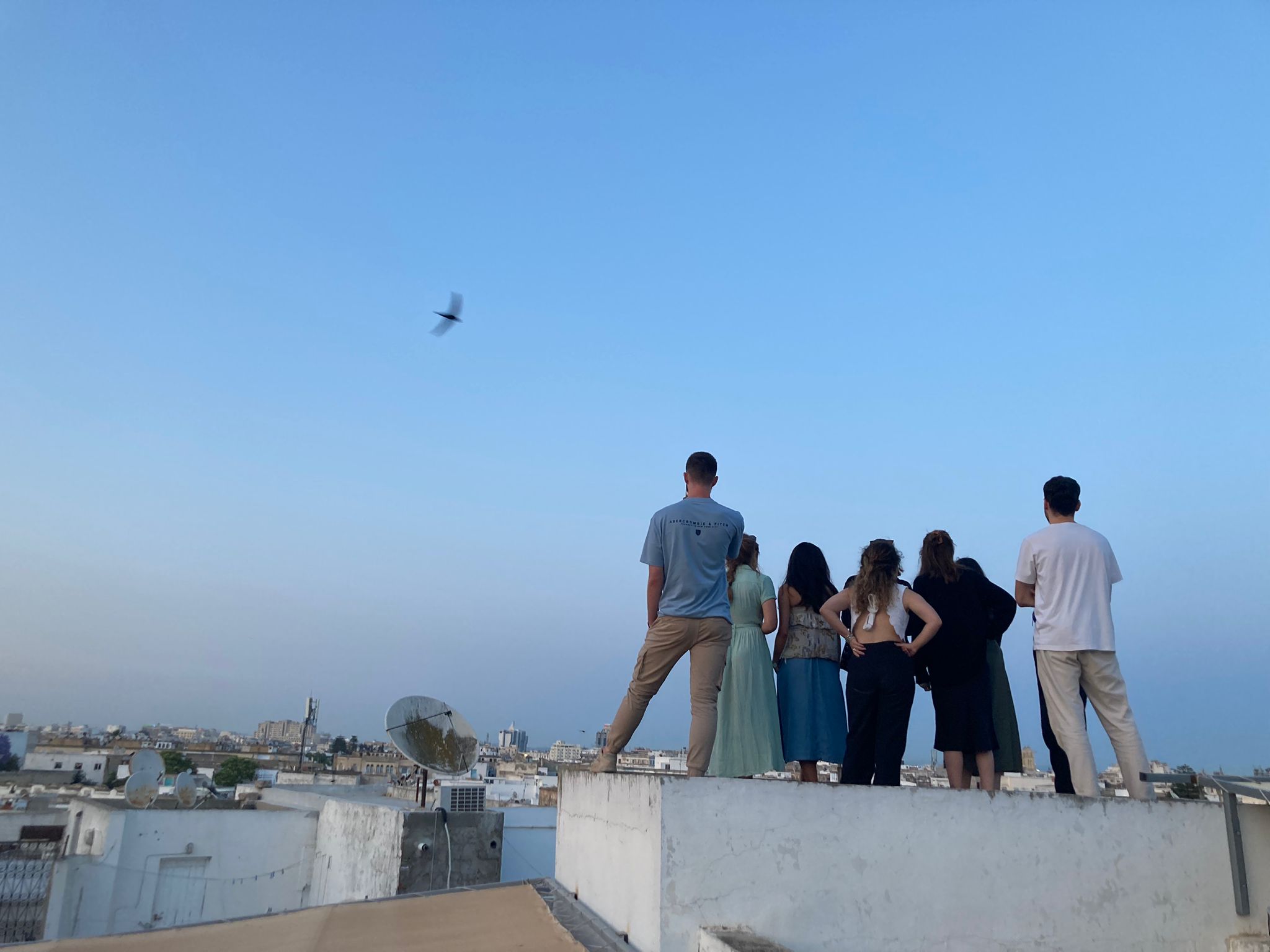
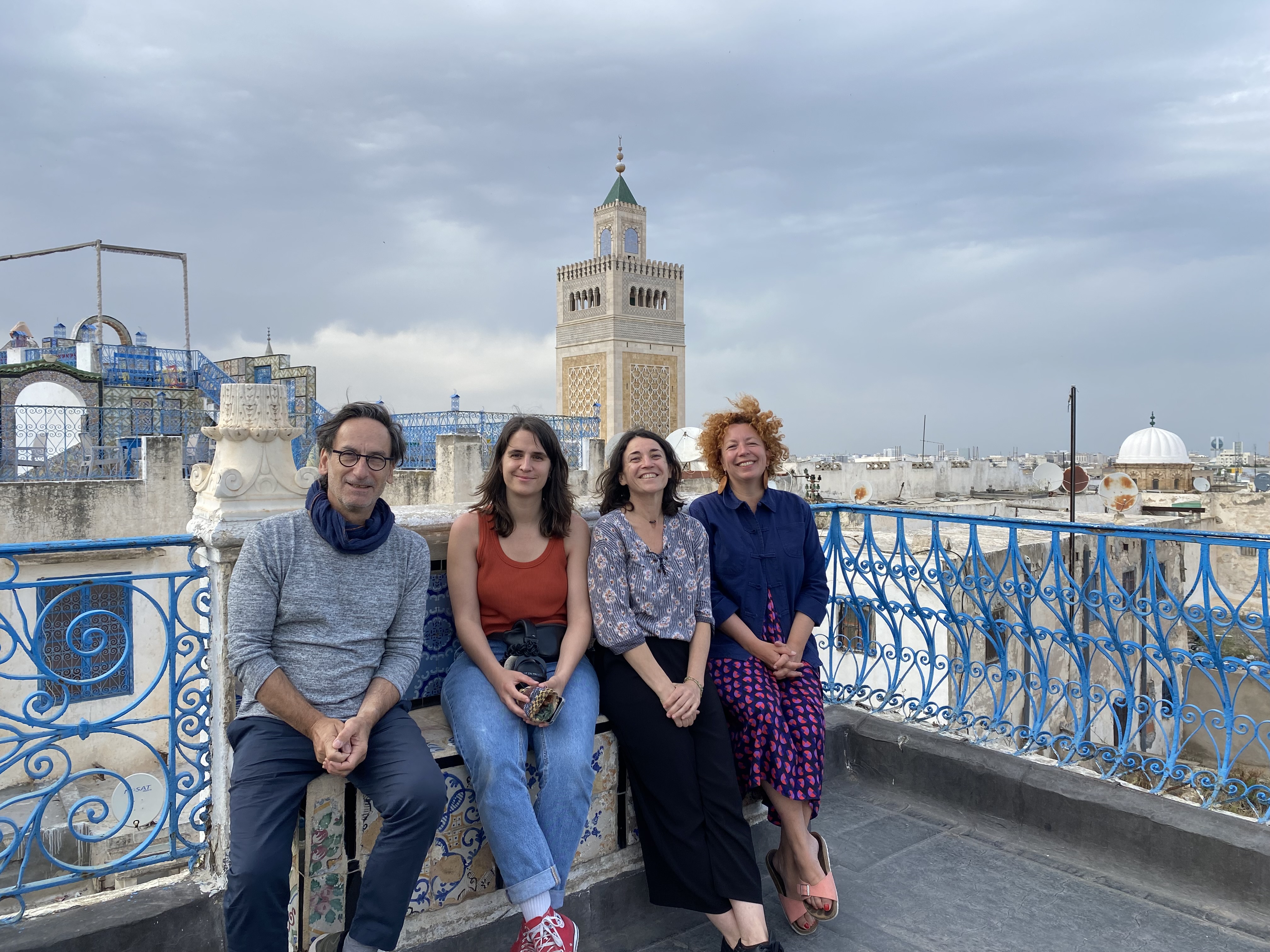
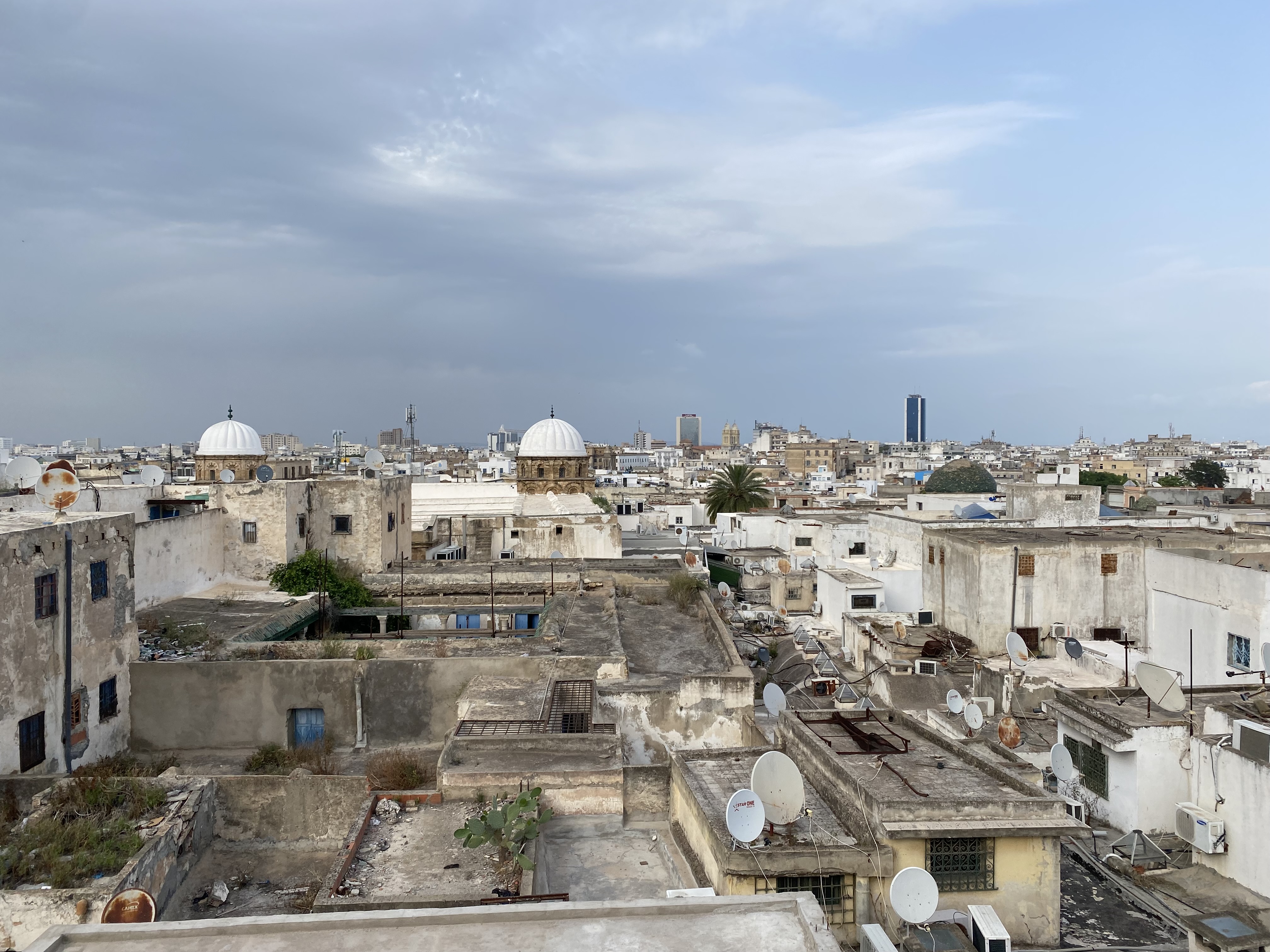
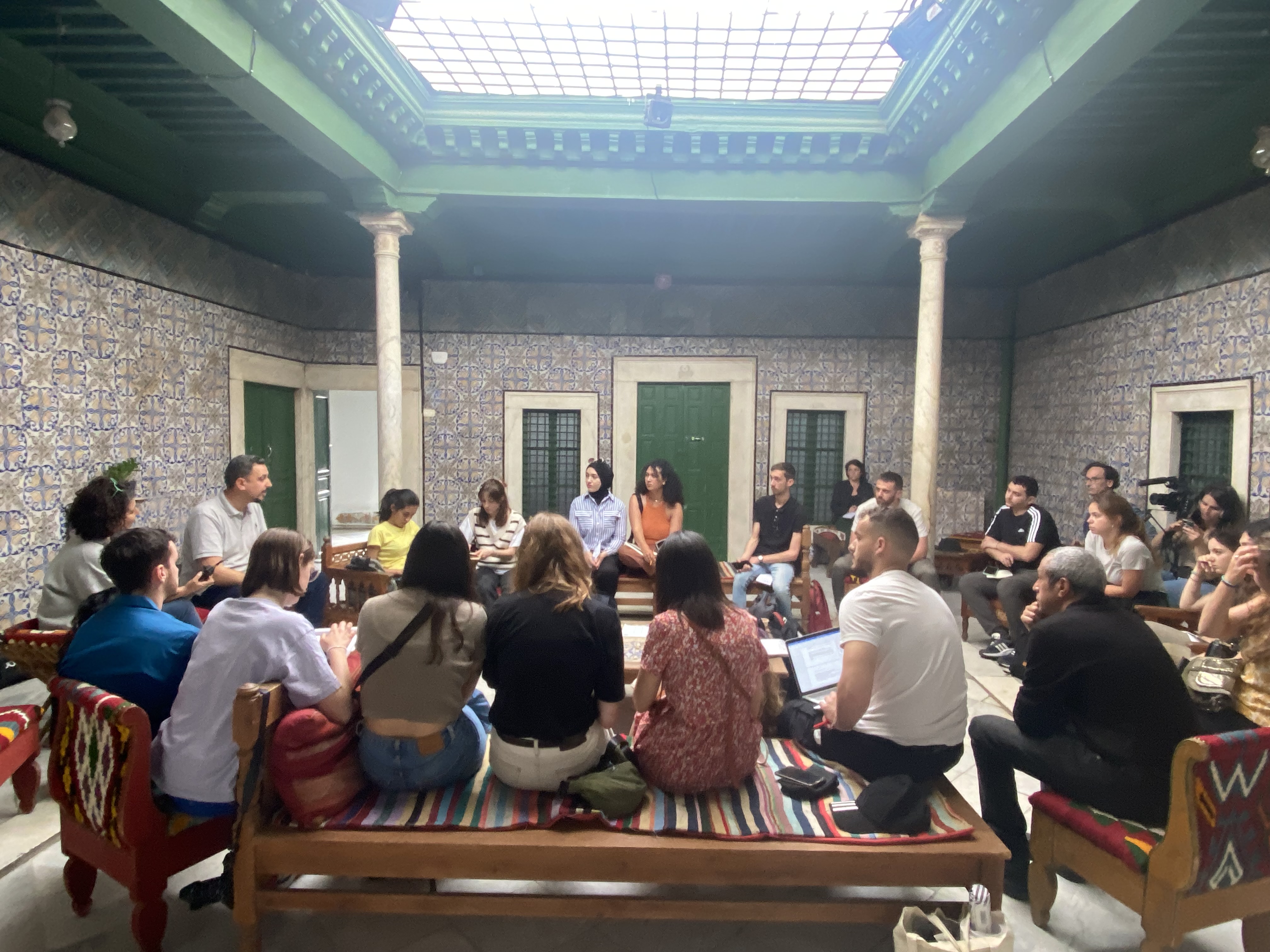
With a very diverse group of students from the Master “Transitions des métropoles et cooperation en Méditerranée” of the University Aix-Marseille and a team of scholars from Marseille and Rabat, we got to work in Tunis around the question: How to achieve more right to the sky for all? In other words, how to use rooftops for the 99%? And what can we in Marseille learn from Tunis and the rest of the Mediterranean region?
An important question for our collective “À Nous les Toits” in Marseille. Our research in Tunis was a very pleasant collaboration between À Nous les Toits (including Wetopia, Marseille Solutions, La Fabrique du Nous and Euroméditerranée), La Chaire Sociétés civiles, transitions urbaines et territoriales en Méditerranée and L’Art Rue.
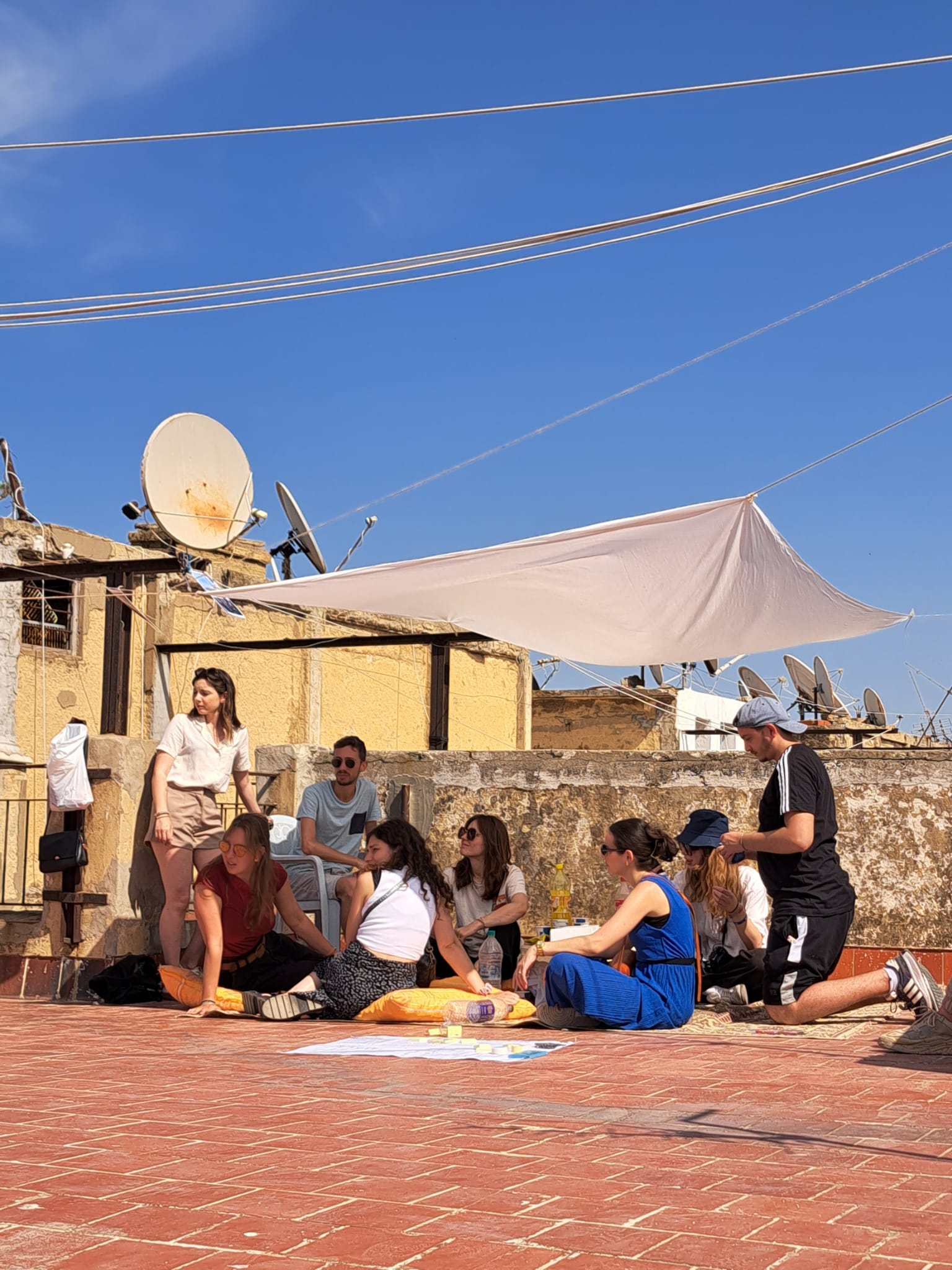
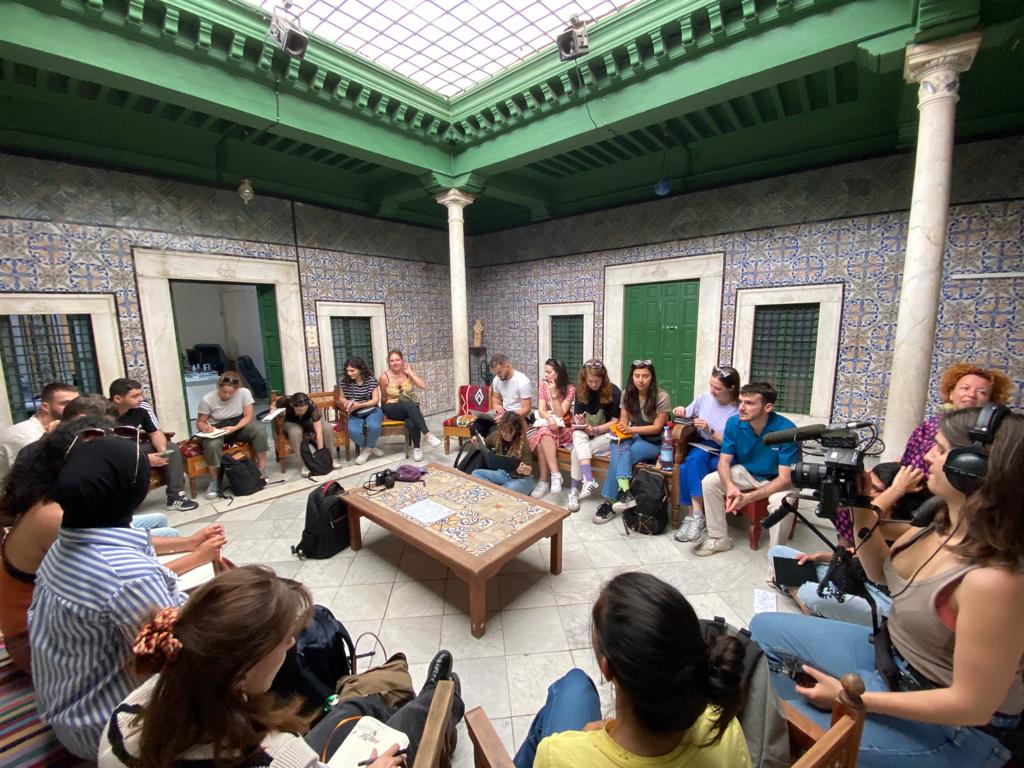
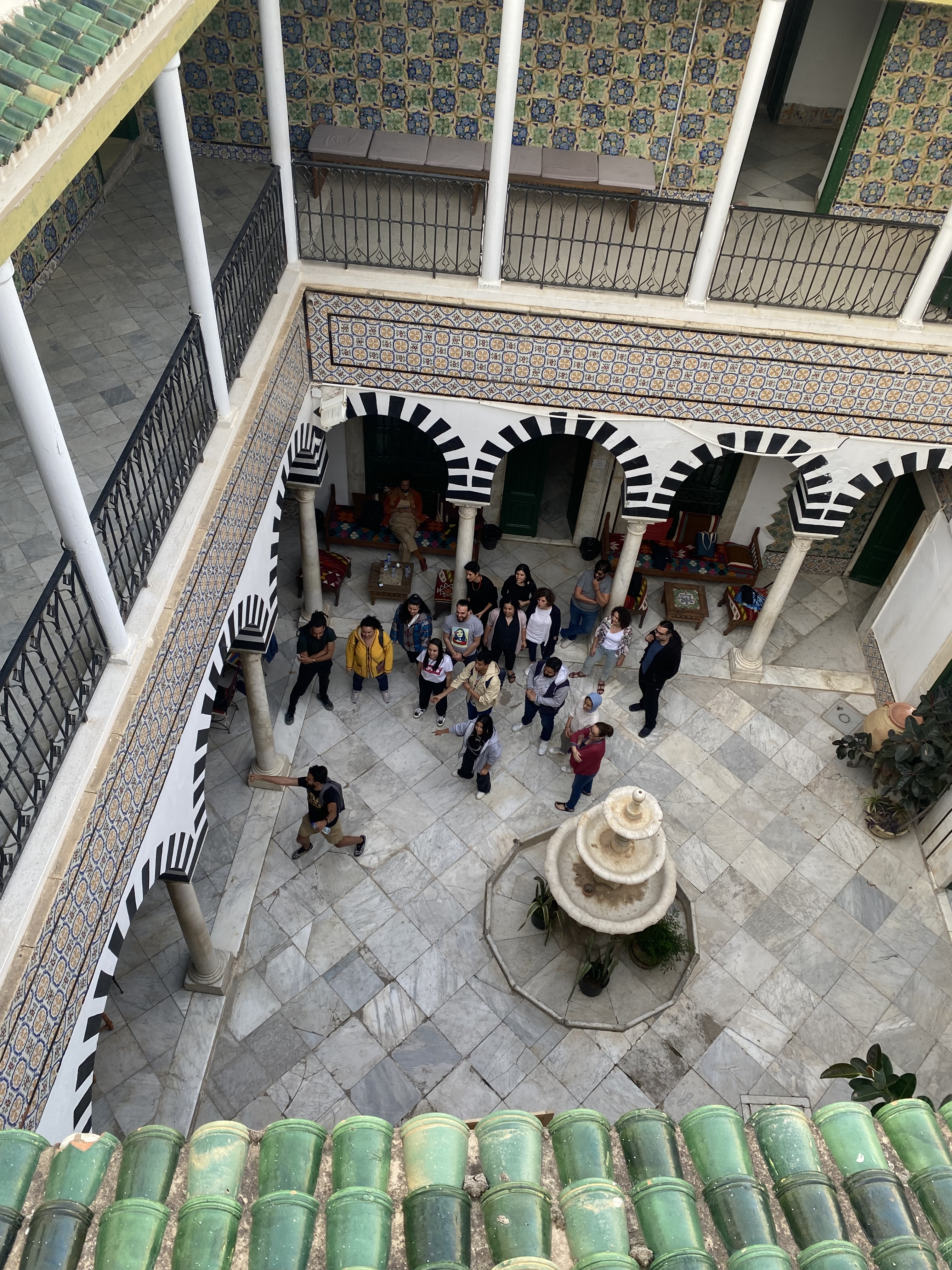
First we exchanged around our request and objectives for research and made work plans together.
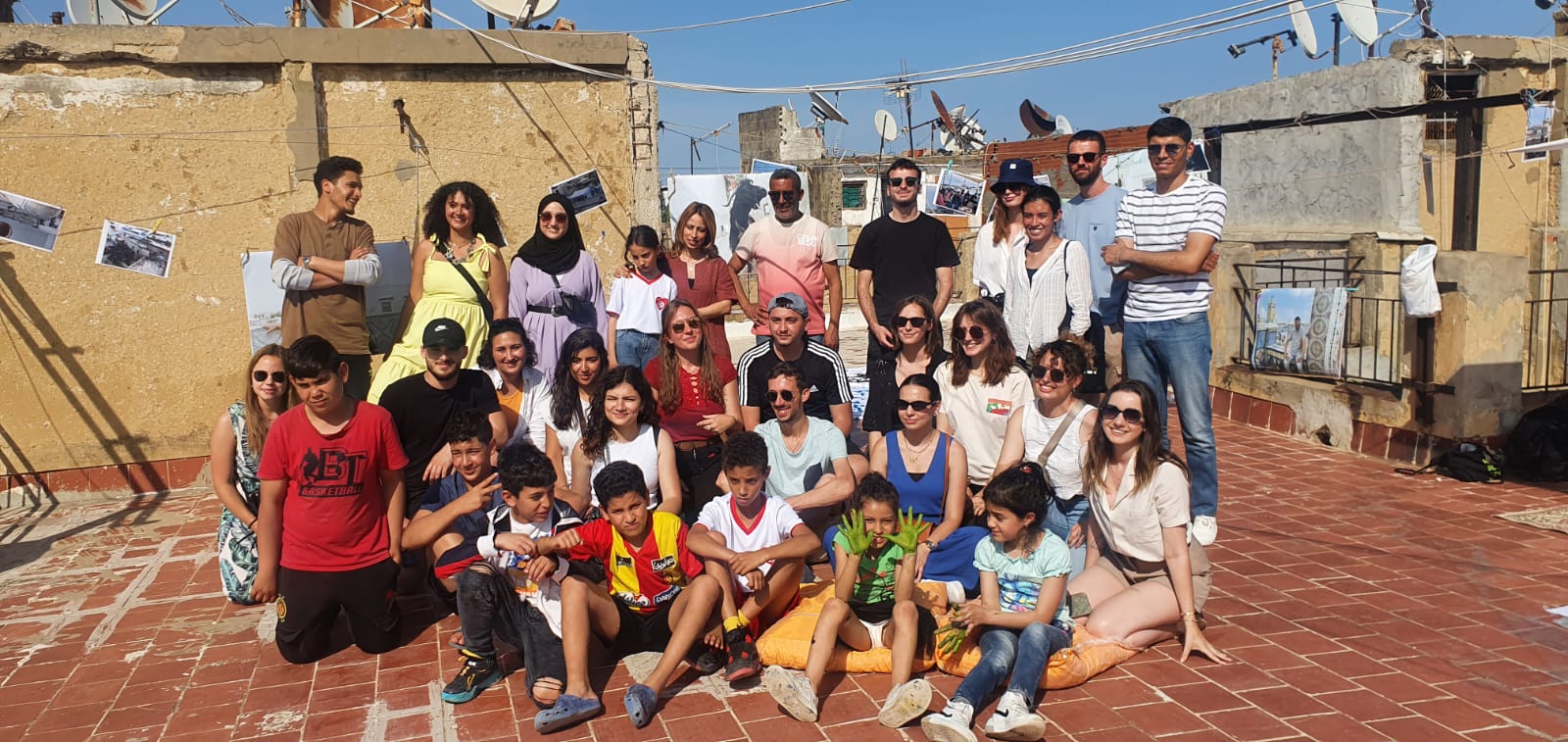
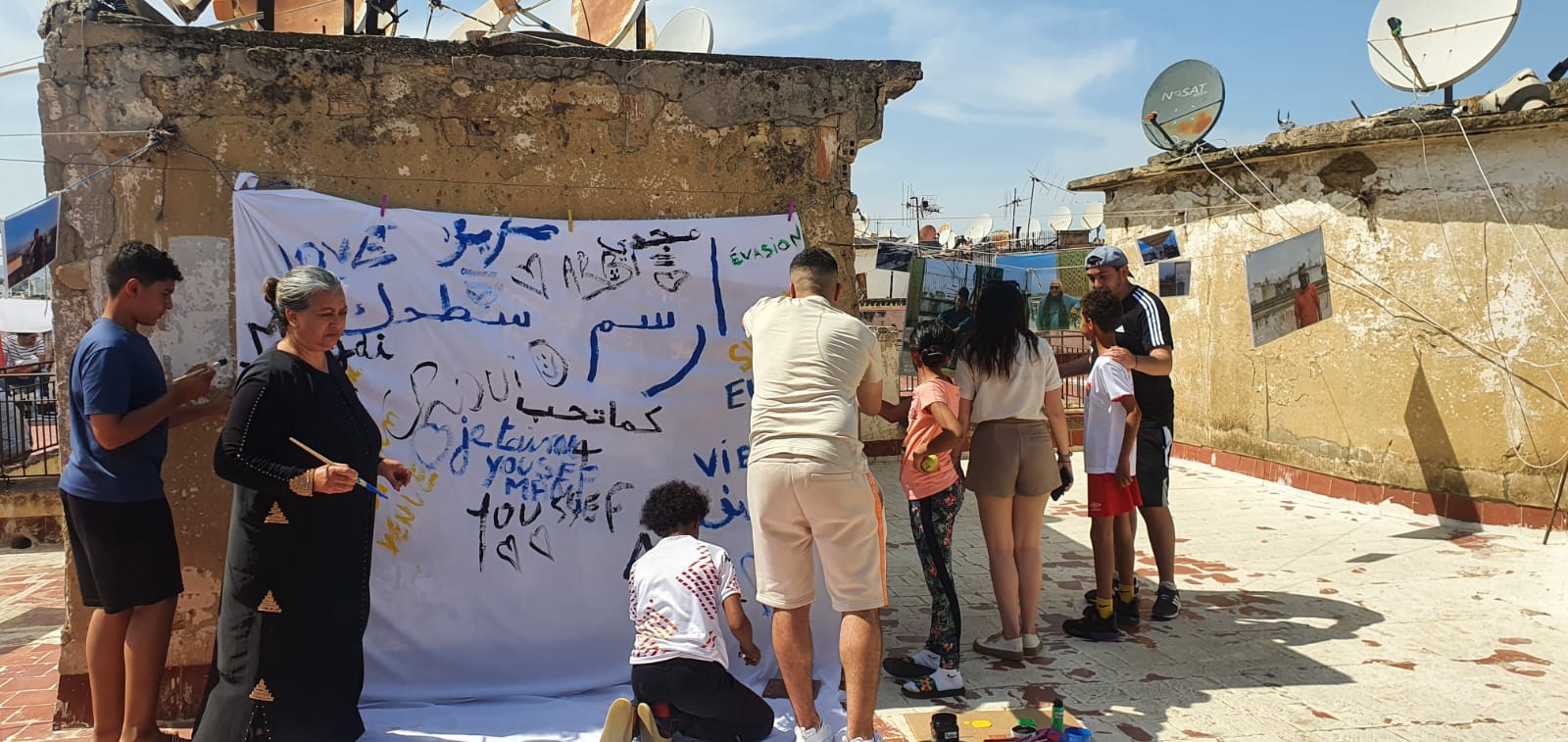
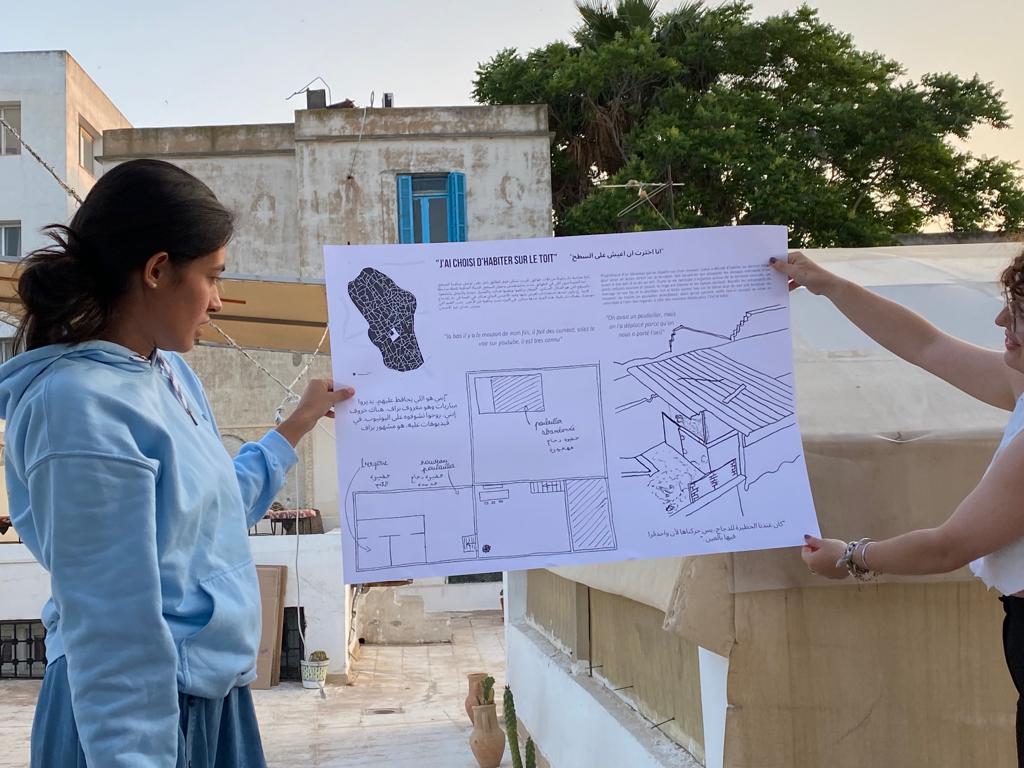
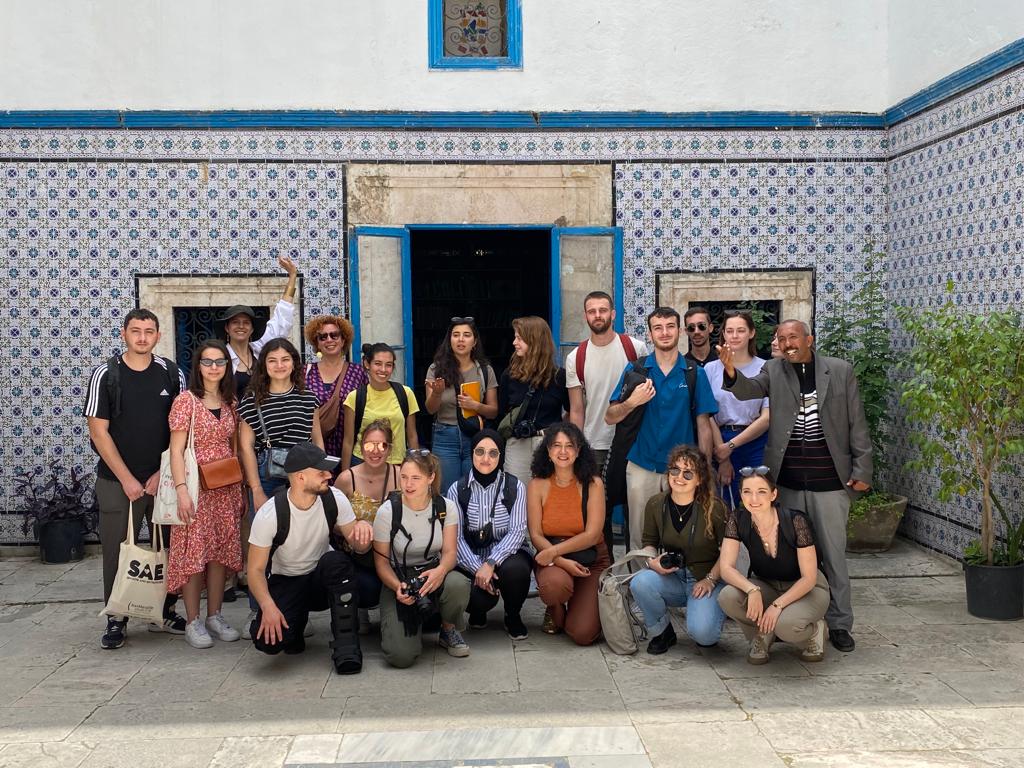
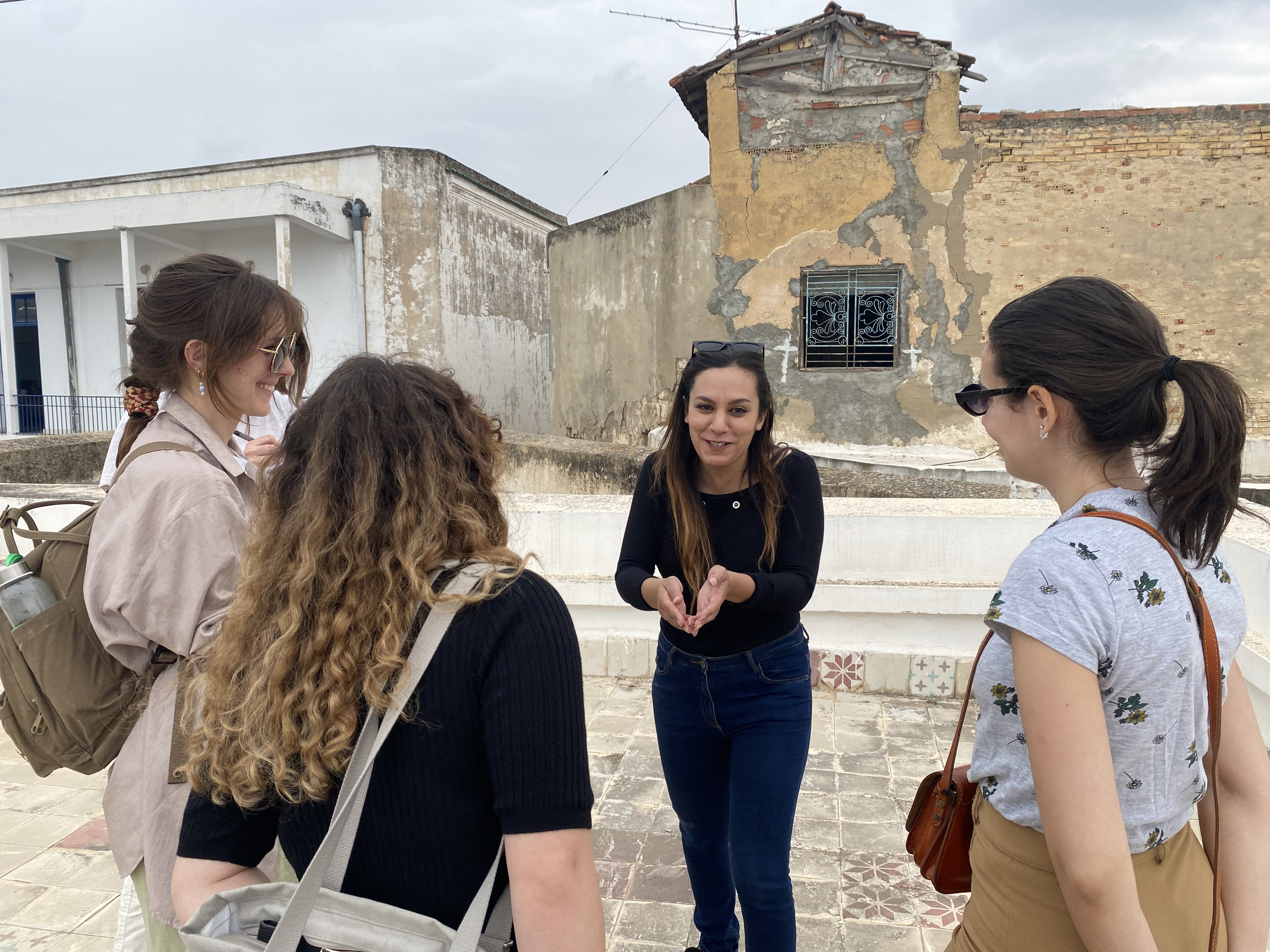
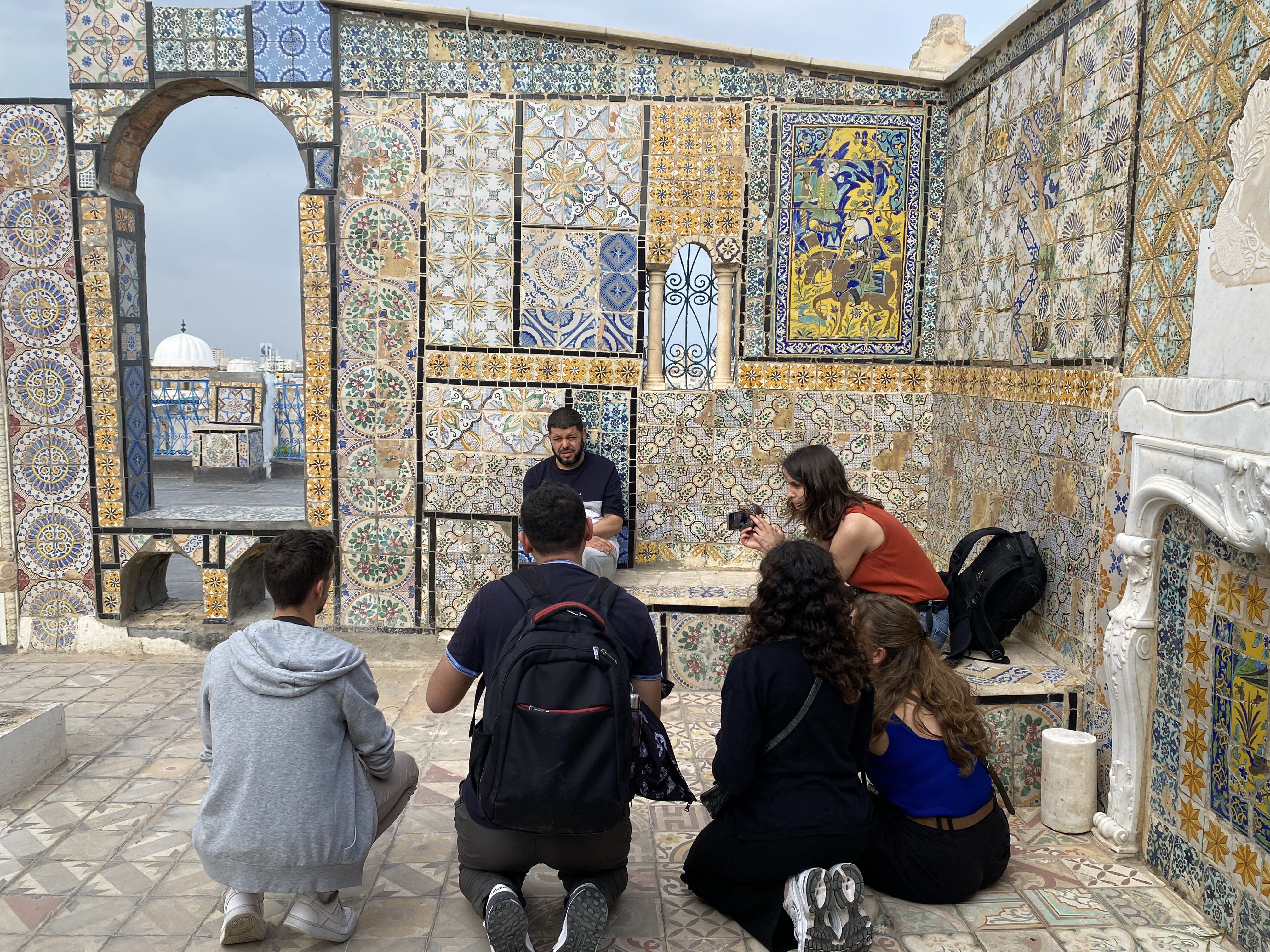
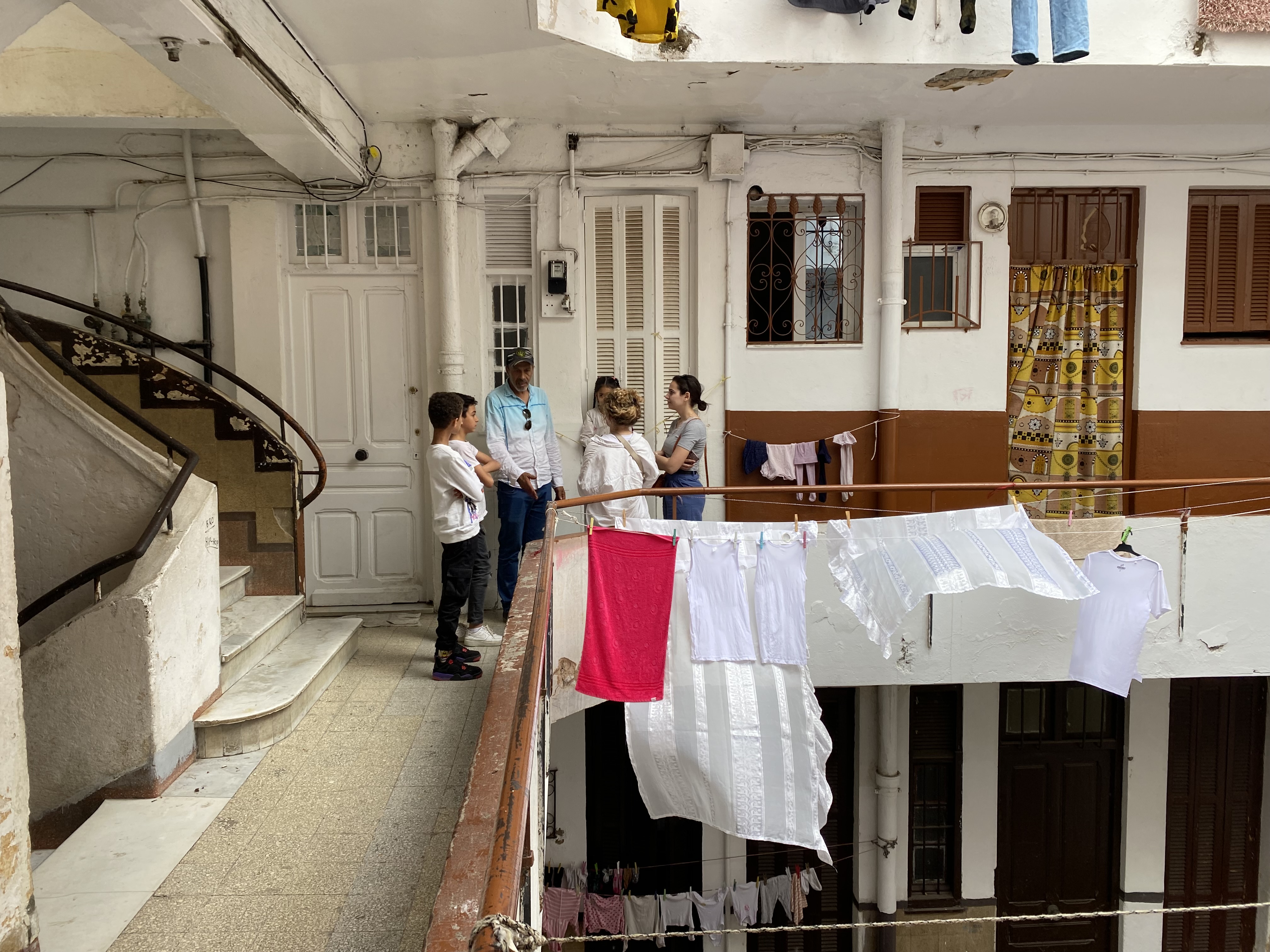
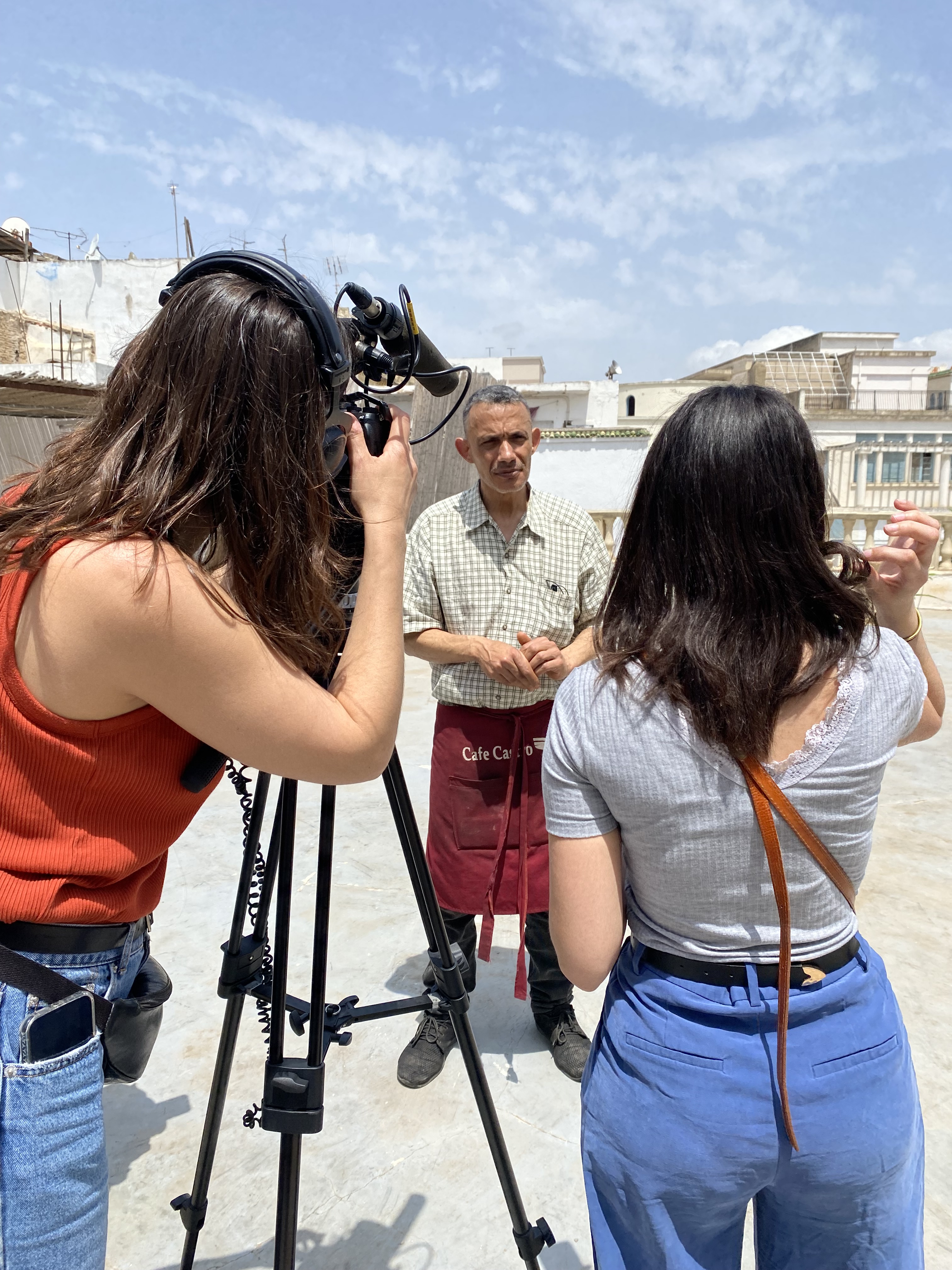
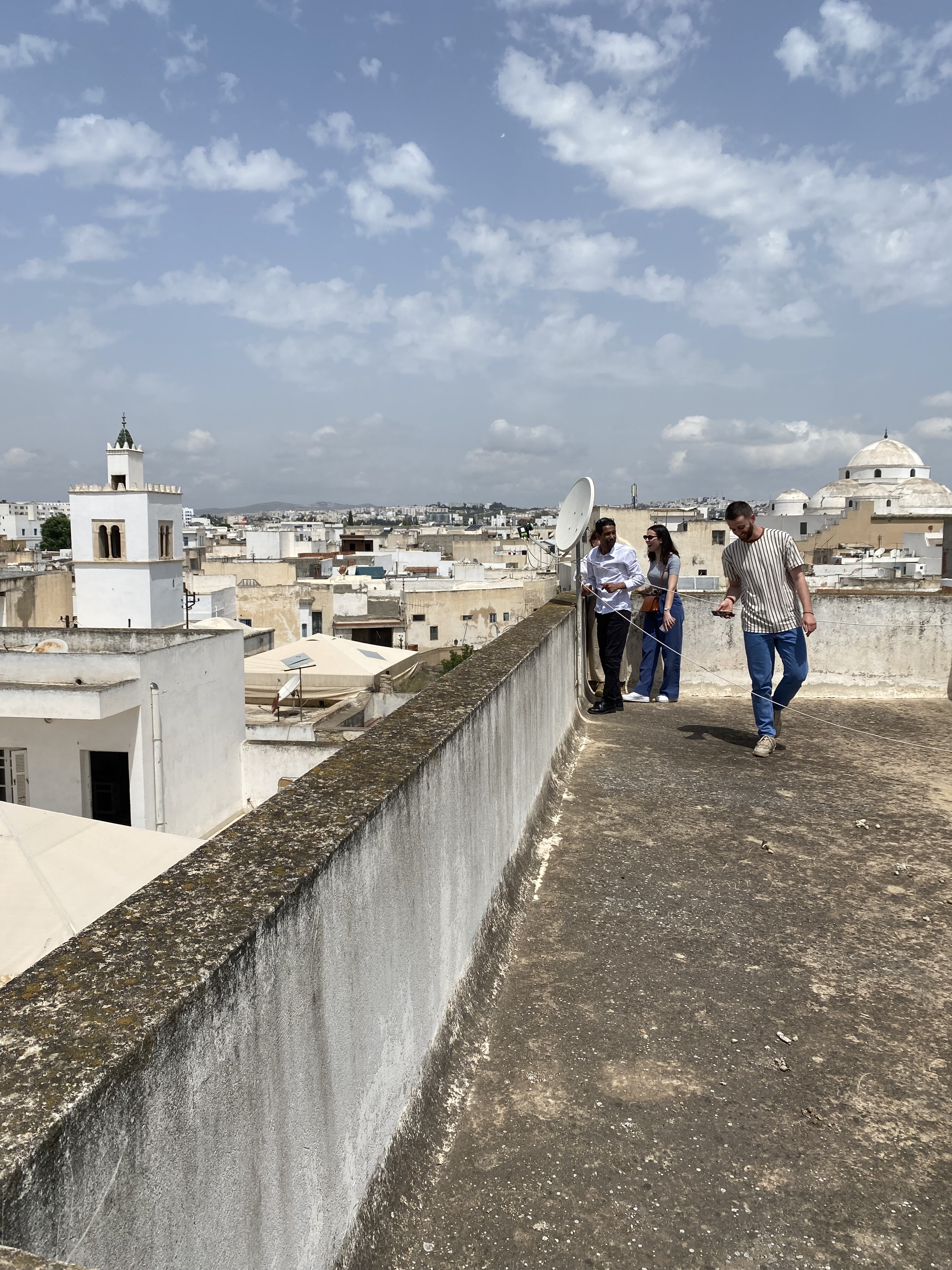
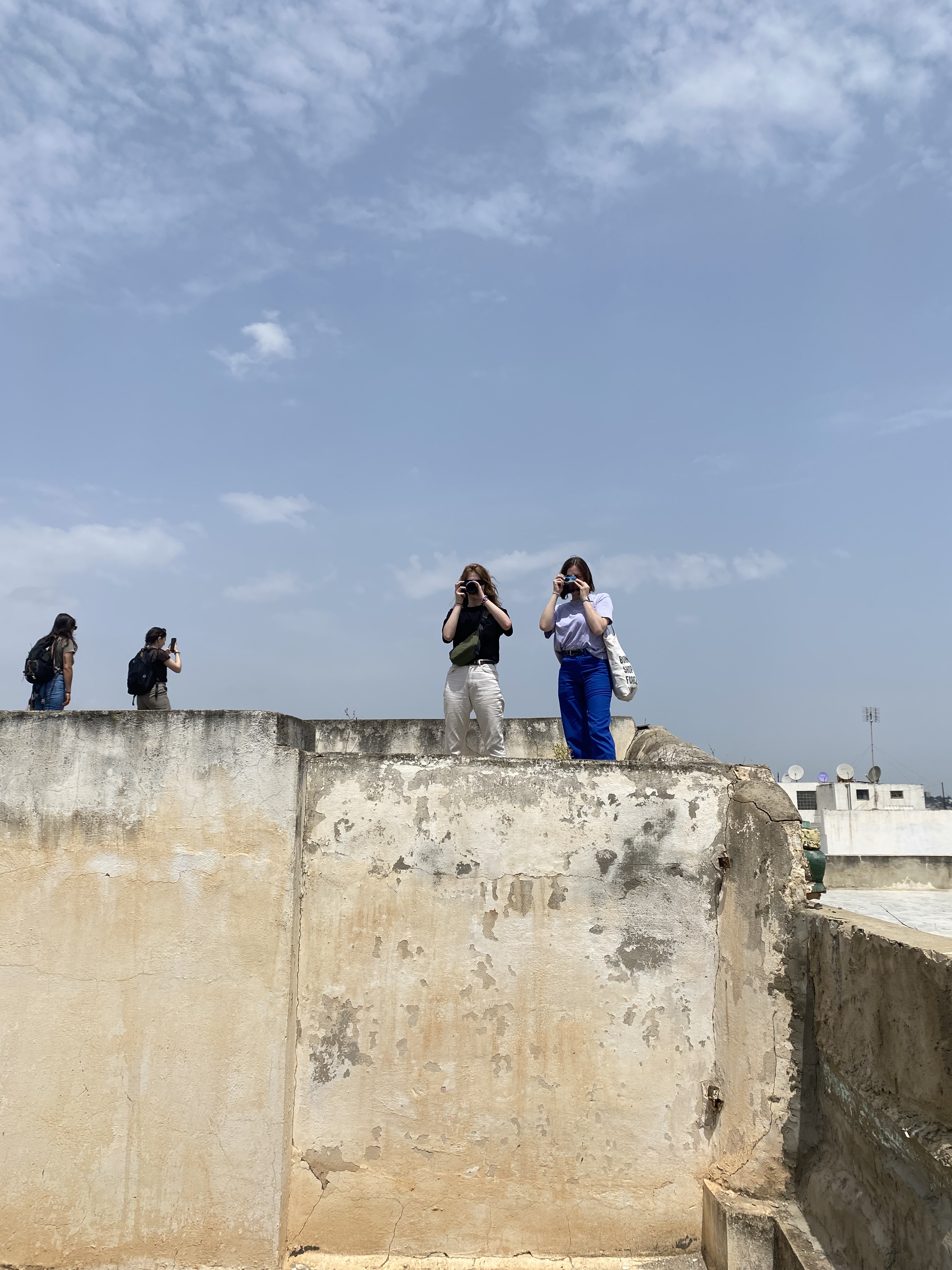
Then the 18 students got to work with residents of the medina to explore the different current and potential functions of rooftops. And so happened + 30 conversations on as many rooftops. What a rich harvest! What beautiful and surprising conversations!
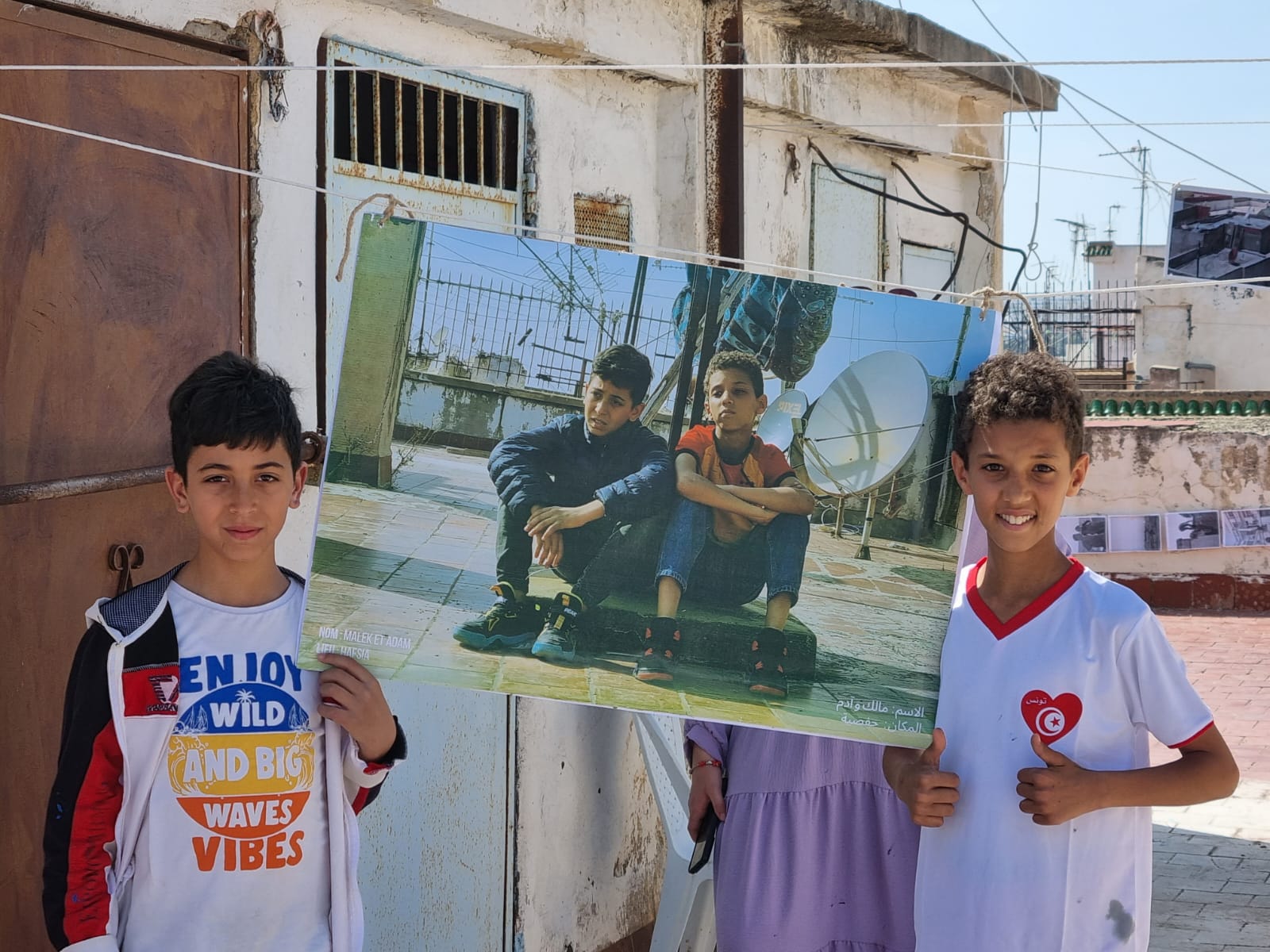
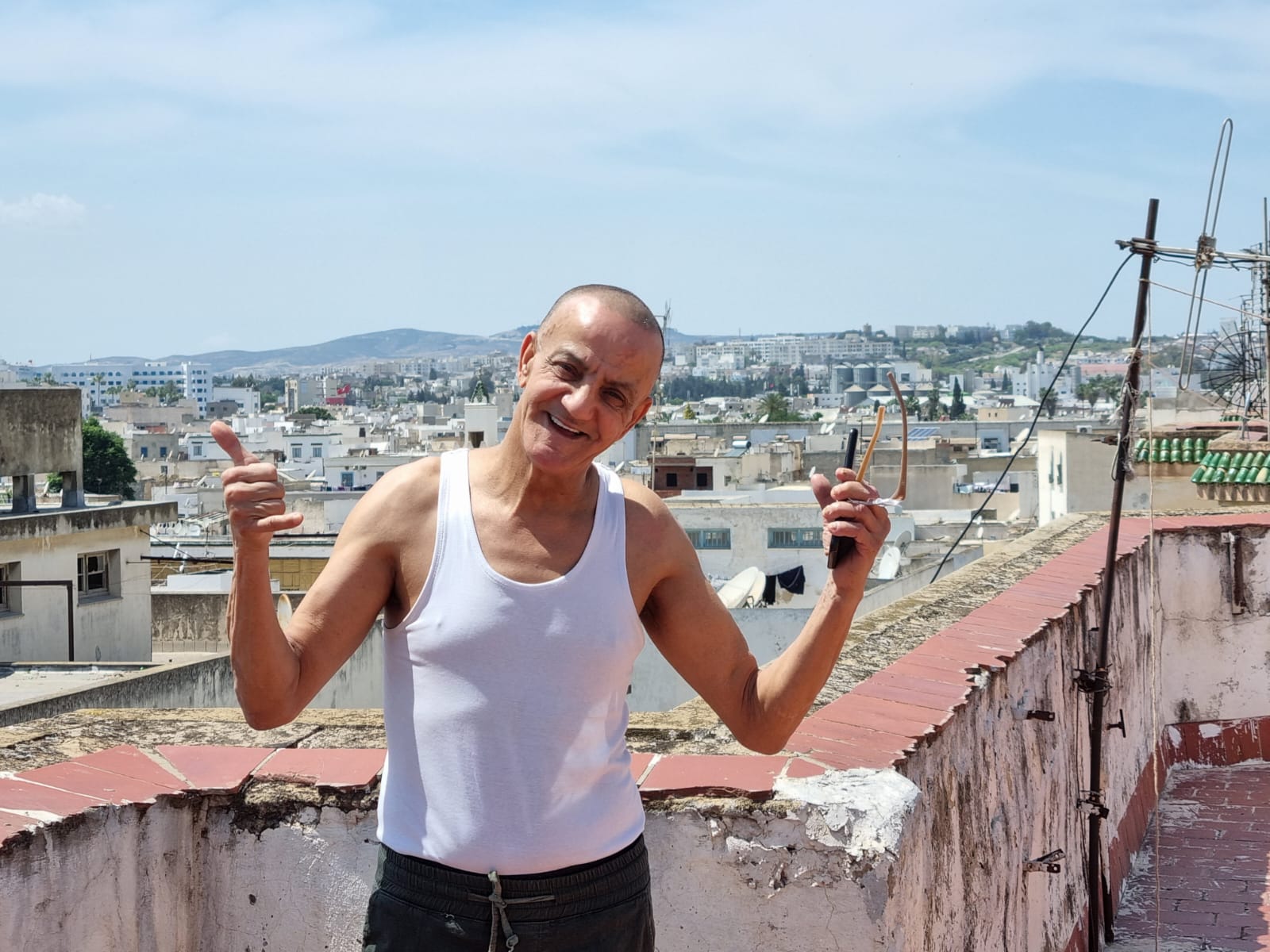
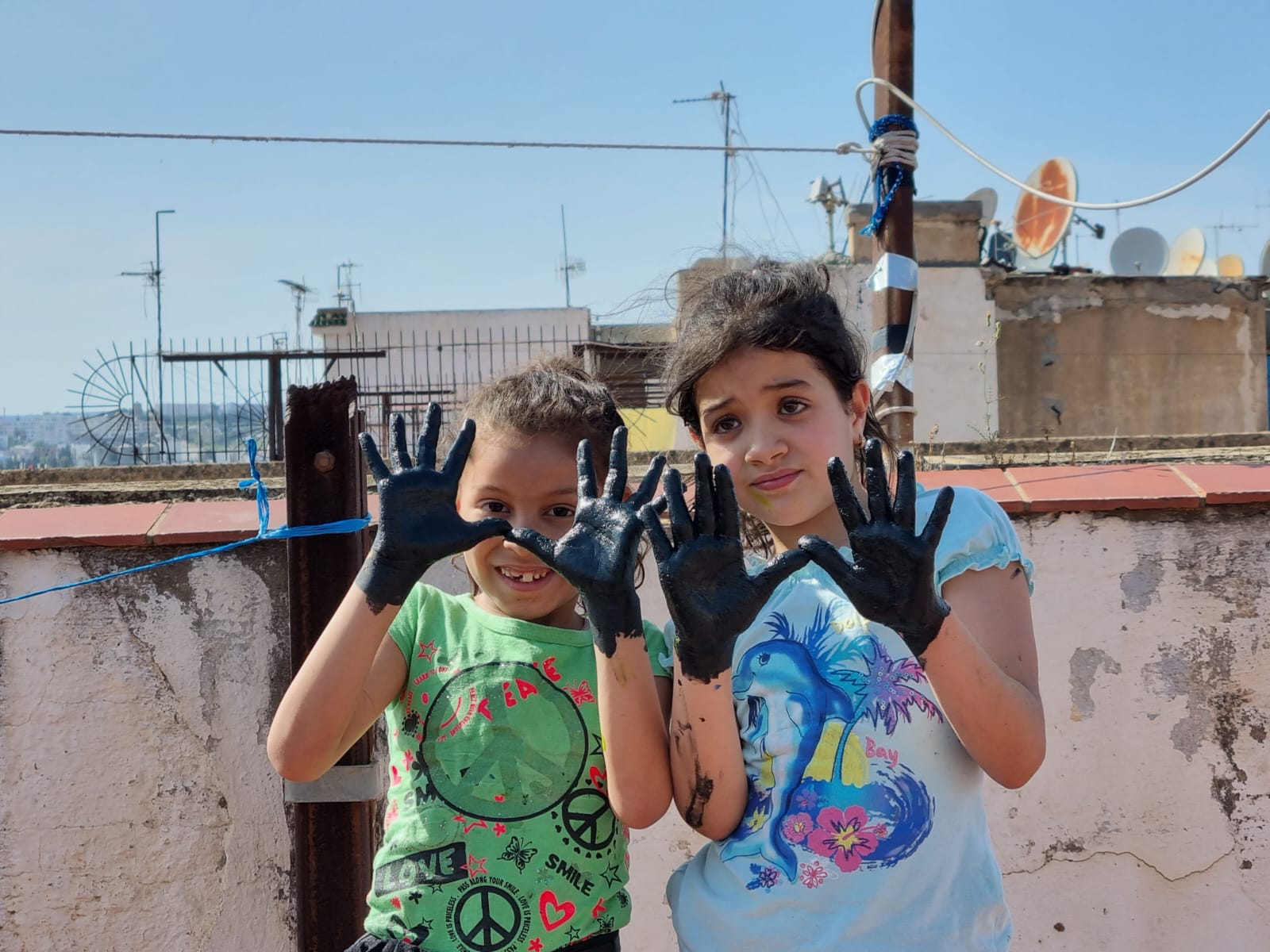
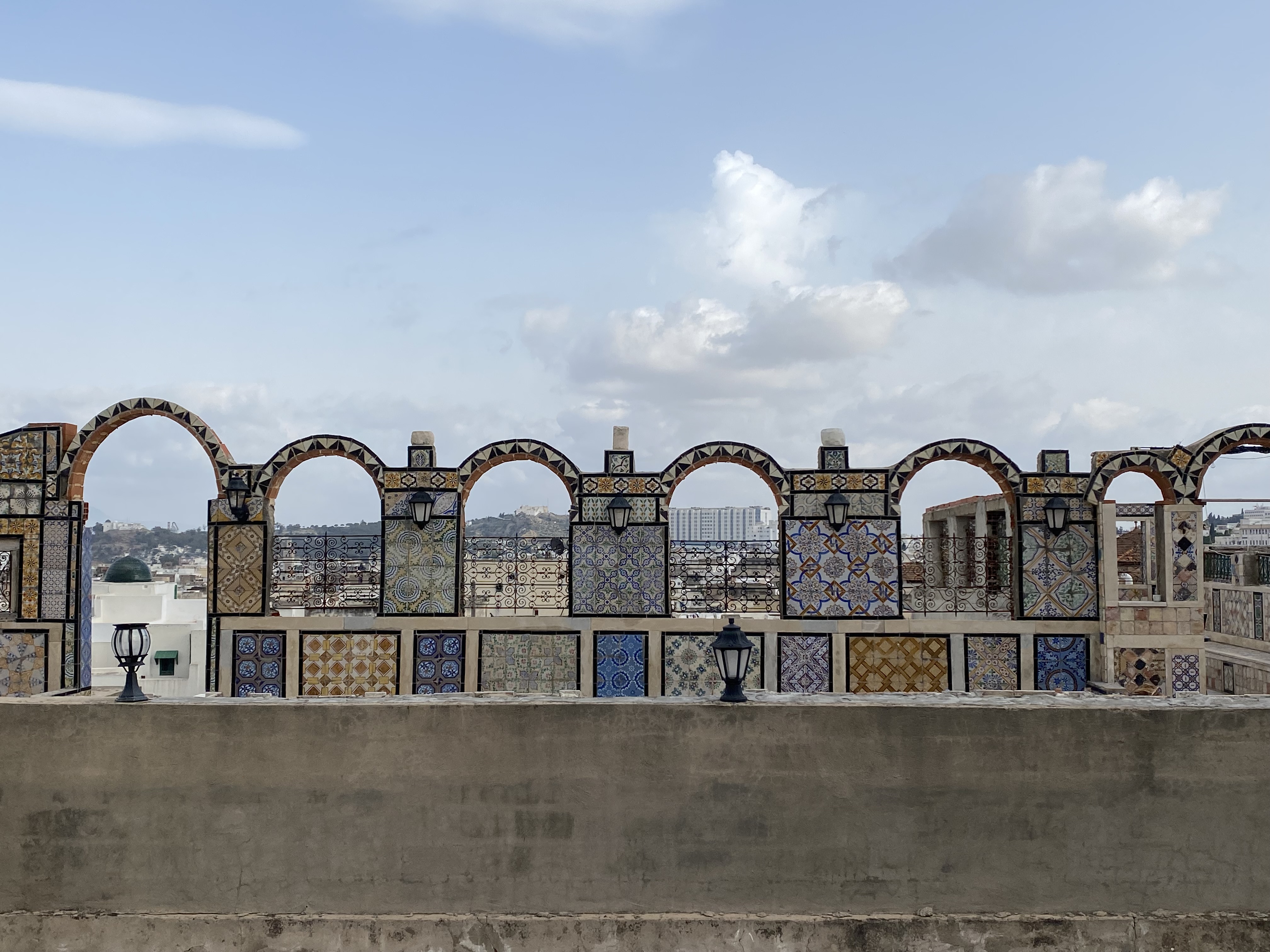
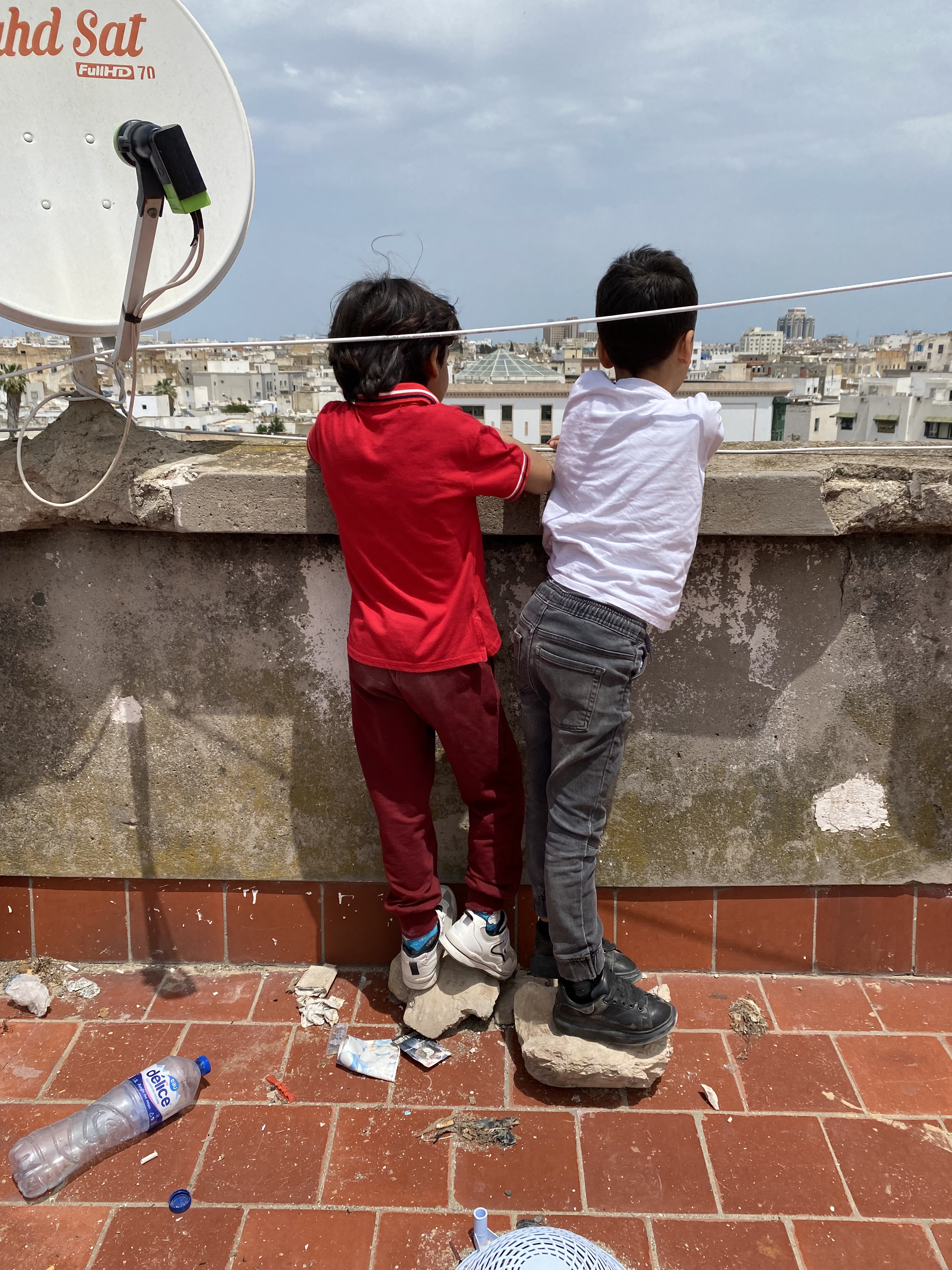
They spoke to women, men and children, to people who use roofs and leave them idle. We discovered all the things that happen on rooftops, such as engagement parties, selling carpets, family gatherings, hiding from others, keeping animals, enjoying panoramas, sleeping under the stars, cooking and hanging laundry, meditating and praying, growing plants, and getting into mischief.
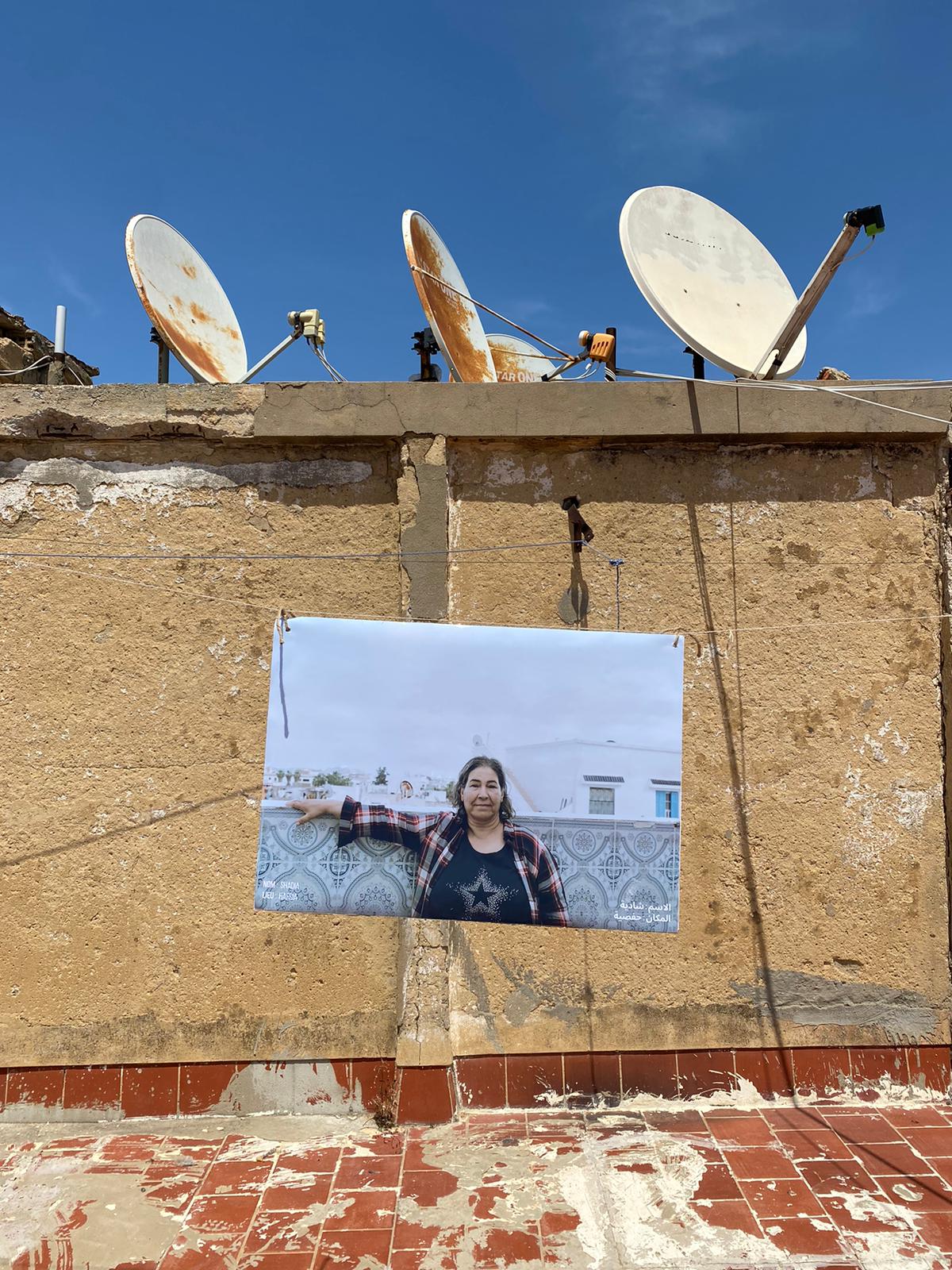
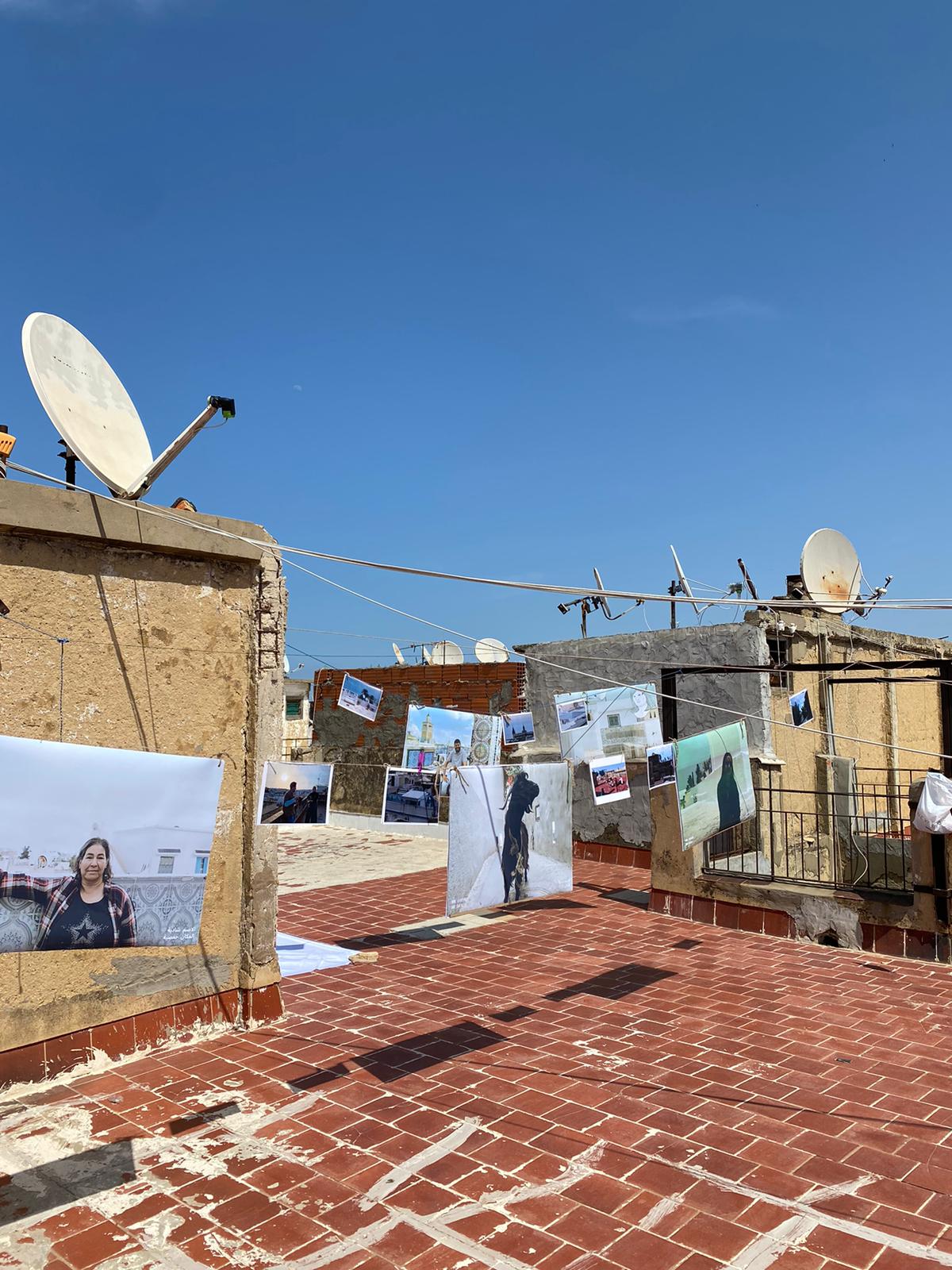
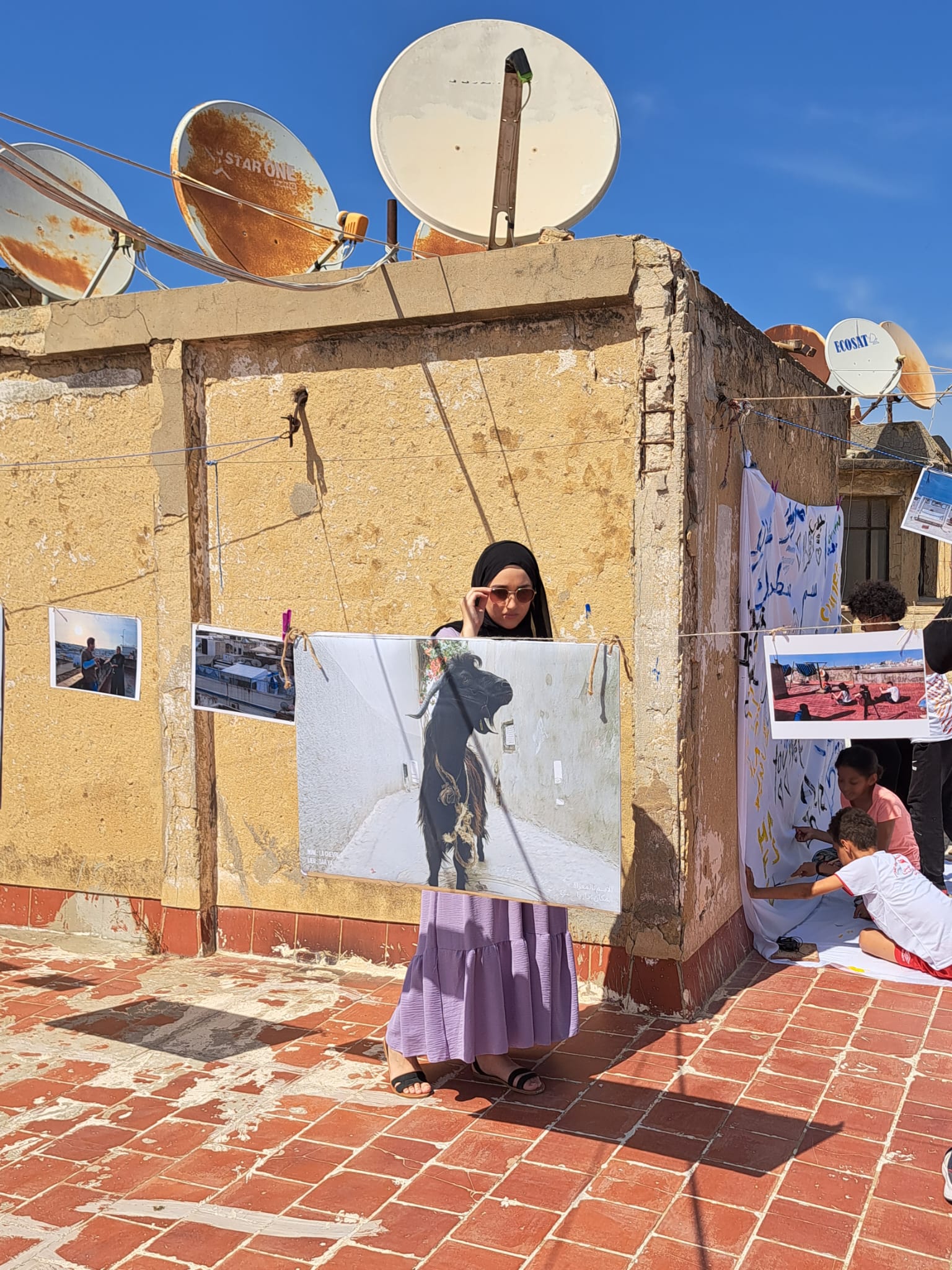
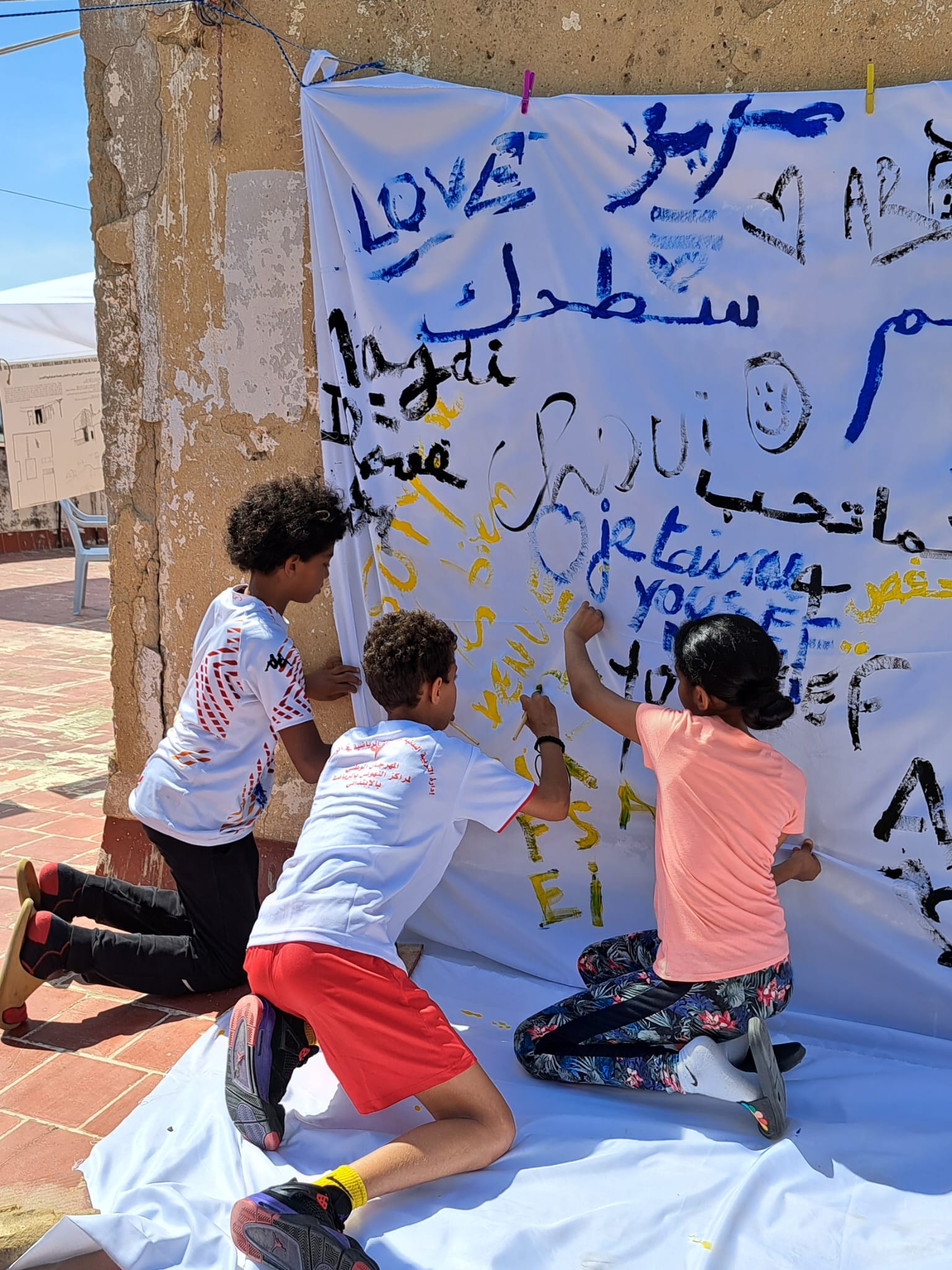
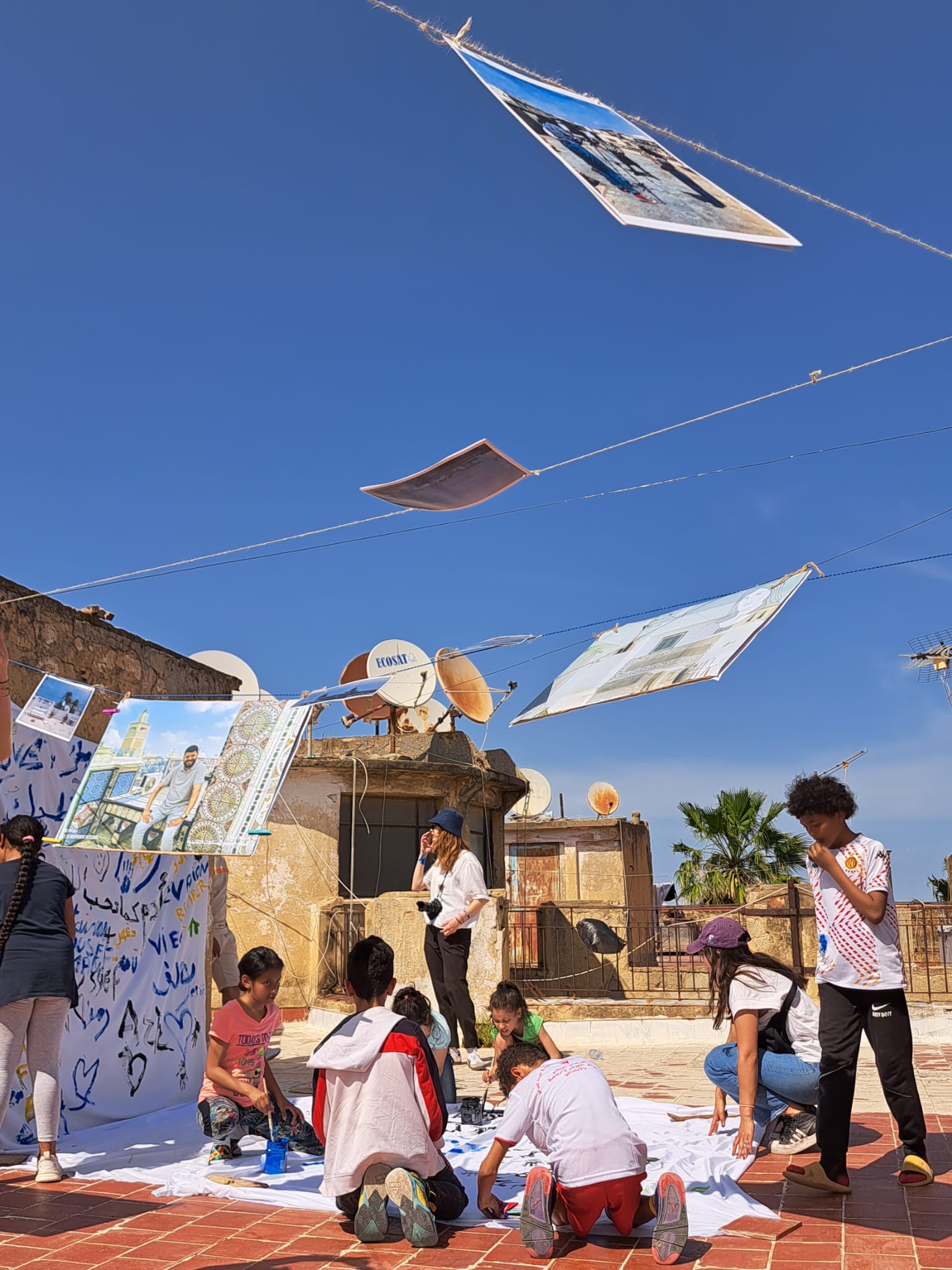
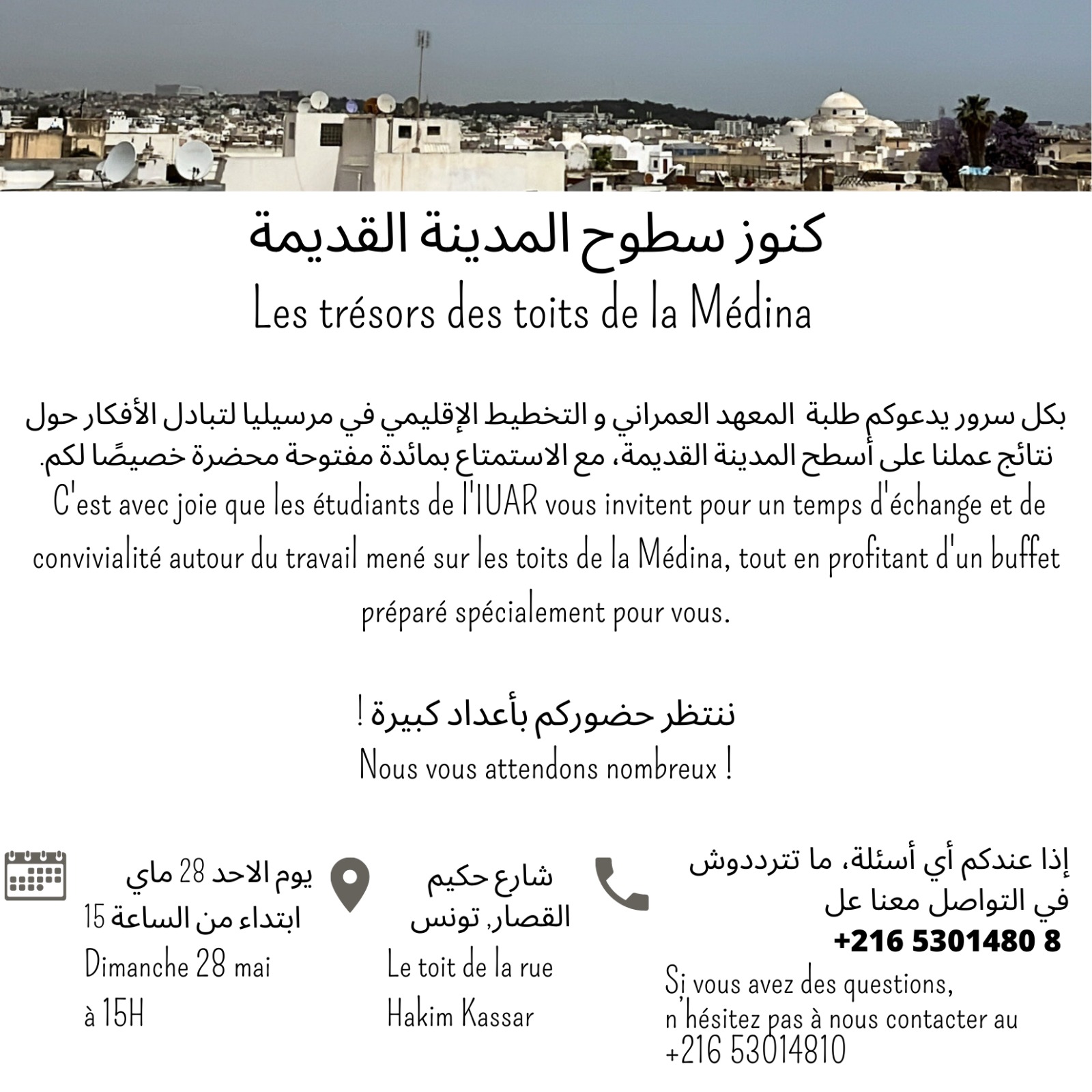
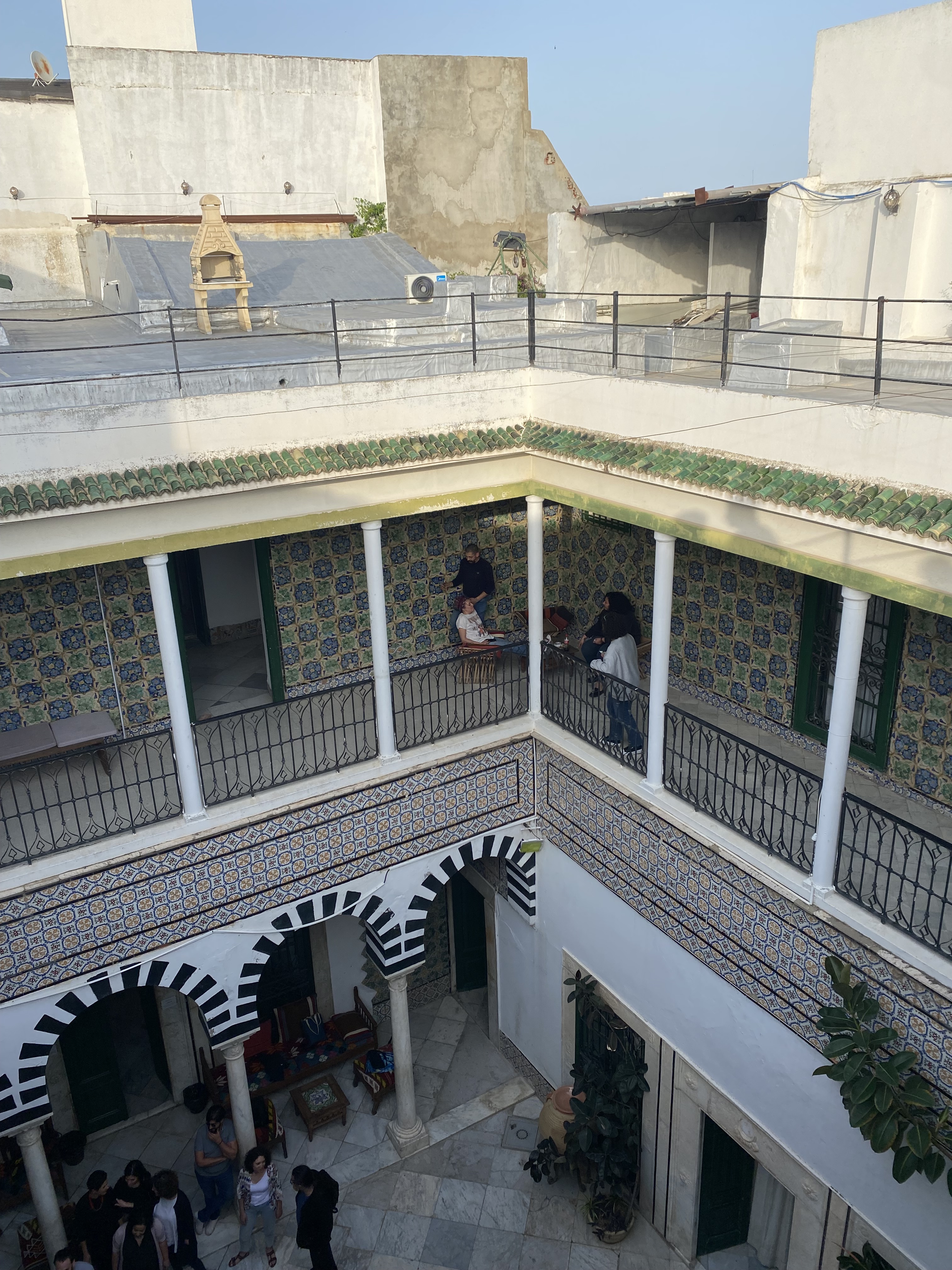
This info and insights were turned into maps, portraits, stories and an expo on a rooftop of a residential block in the medina. 10 themes on the use of roofs were worked out and they will be linked to Marseille roofs. What connections do we see between roofs and between Tunis and Marseille? We are also happy to share the result at our rooftop days on 6 and 7 October in Marseille. Furthermore, we are exploring together how we can also sustainably develop a Mediterranean ecosystem around the right to the sky for all.
Special thanks to all partners, the students and the residents of the medina.





 Wetopia