by Joke Quintens, creator of “This is Us. This is Brussels.”
In het Nederlands. En français.
Brussels… it’s all over the news: bullets in our streets, car drivers and cyclists at each other’s throats, a government that just won’t form, and a budget deficit in which no one sees their future anymore. These are the images and narratives we’re bombarded with daily.
But now imagine for a moment that we don’t just see Brussels as the problem, but also as the solution to finding one another again. Because in Brussels, a new “us” is also growing, one that could serve as an example. A new “us” of a city that is young, dynamic, multilingual, diverse, and complex, and where a new spring is ready to break through. Not an “us” that divides. Not an “us” opposed to a constructed “they.” But an “us” that connects.
“This is Us. This is Brussels” is building a human archive of Brussels residents in the 2020s. With this project we have been searching for two years for this new “us,” for the identity of Brussels and what binds its people together.
“Bruxelles, c’est un joyeux bordel qui se partage.” “Brussels, is a lack of pretension.” Fantastic, isn’t it? We should listen to the people of Brussels more often. Despite its flaws and challenges, the people of Brussels love their city. They feel at home here, precisely because of its mix of cultures, backgrounds, and experiences that blend and give rise to something new: a new Brussels “us.” A distinctly multilingual city, a distinctly café- and bar-rich city, a city of departures and returns, a city that is distinctly a ‘terre d’accueil’, a place of radical superdiversity where no majority can dominate with its voice. Brussels: an explicit spectrum of opportunities and new perspectives. Brussels: a laboratory for creating more “us,” something we are all so deeply yearning for.
But more “us” on its own is not enough. Too often, “us” is still used in a divisive way, by setting itself against a consciously or unconsciously constructed “they.” Us the Eurocrats, us the Gen-Zers, us the Italians. That kind of “us” disrupts, leads to exclusion, and gets us nowhere. The new “us” in Brussels, on the other hand, is connective. It brings together Brussels residents in all their diversity. It builds bridges instead of walls. It opens minds for those who open themselves to it. It invites us to discover, and to continue building a better Brussels. In short, this new “us,” which is already visibly blossoming in the capital of Europe, is the cultural framework of Brussels.
Take young Thaya (20), for example, who interviewed 92-year-old Charlotte. Charlotte’s father was deported to Auschwitz during World War II. She grew up in Liège but later moved to Brussels. In 1967, she was having lunch at the warehouse Innovation on Rue Neuve when a devastating fire claimed dozens of lives. She now lives in Uccle and shares her story with a young Brussels woman of African heritage who hears for the first time about the Innovation fire. At last, they meet, listen to each other’s stories, and share their lives. In Brussels.
Thaya: “What moved me most during these conversations was bridging the gap between the younger generation and its predecessors, and discovering that we share common goals. We are capable of engaging in dialogue, of listening to each other’s needs without judgment. I think this project is important to discover the perspectives of people we normally don’t hear or meet in such a diverse city.”
And that is how “This is Us. This is Brussels.” searches for the new “us” in Brussels. By talking with one another and listening. The “us” of the football field, for example, where different people literally work toward a goal. Or the “us” hidden in the homesickness many Brussels residents feel. Or the “us” of those who left Brussels but also returned.
“Chez nous” means home. It’s the place where we feel welcome, find peace, and make plans. It’s the place where we live our lives. In Brussels, everyone is from here and from elsewhere. That too is an “us.” In Brussels, we are all adopted and become part of that big, diverse family.
Yes, there is something that connects us.
Just ask the people of Brussels why they love their neighbourhood in this big city. Many will say: l’entraide, mutual help. Solidarity. It’s the young population and their creativity. But it’s also the anger about the precarity many Brussels residents face, an anger that transforms into resilience, into the strength to rise again and again. It’s all of this. And that is precisely the potential of this place, of Brussels, of the people of Brussels.
Brussels is not the problem: Brussels is part of the solution.
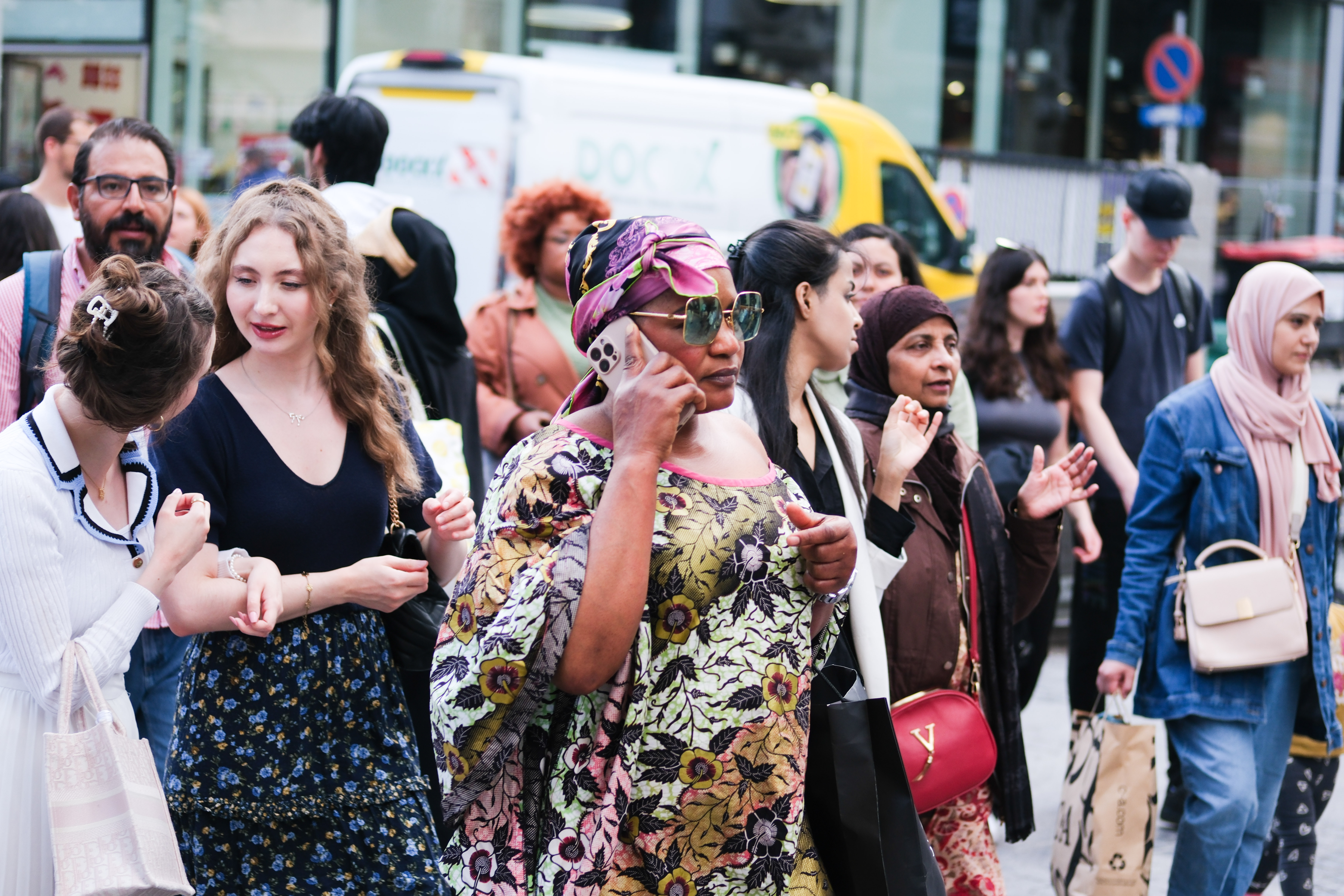
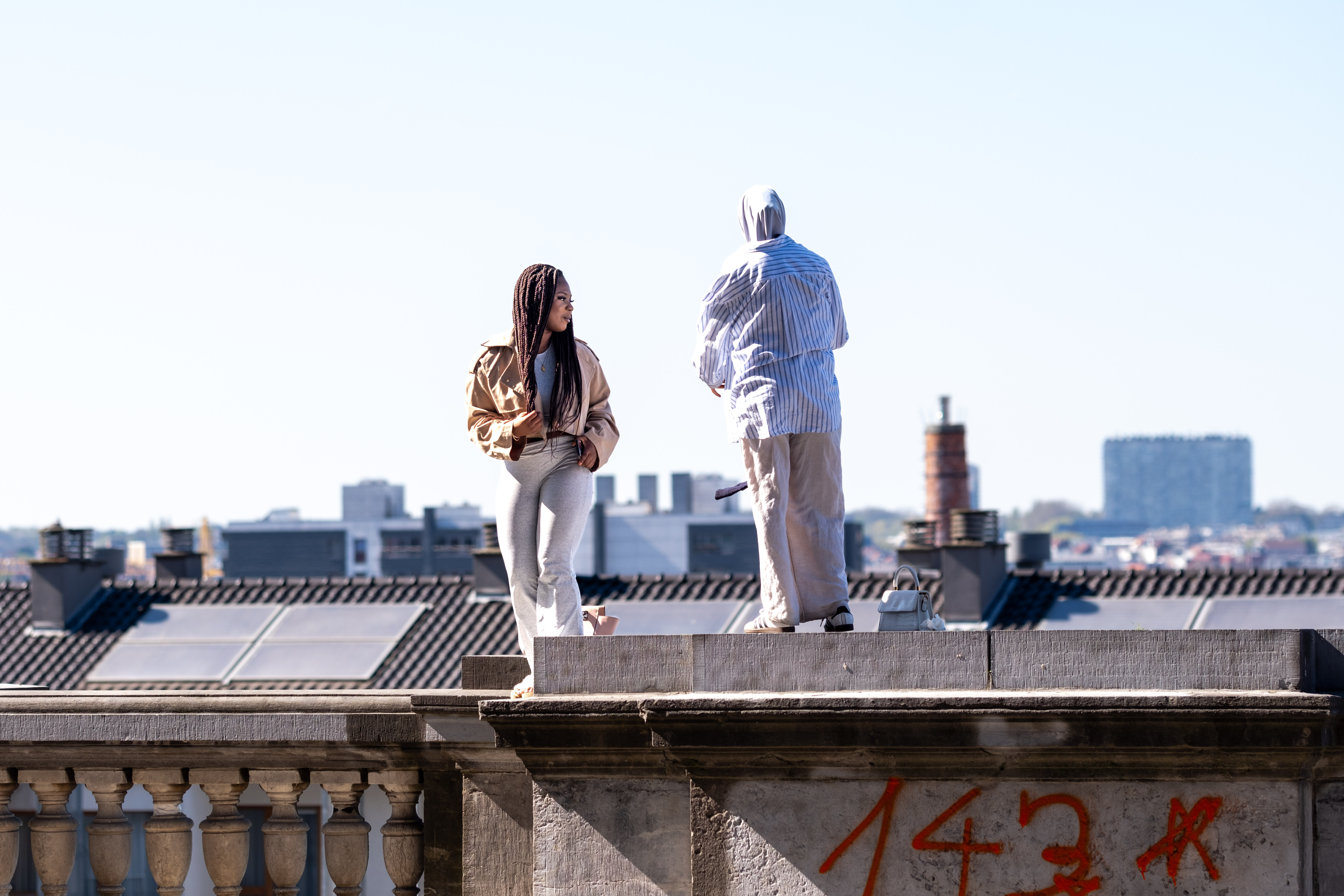
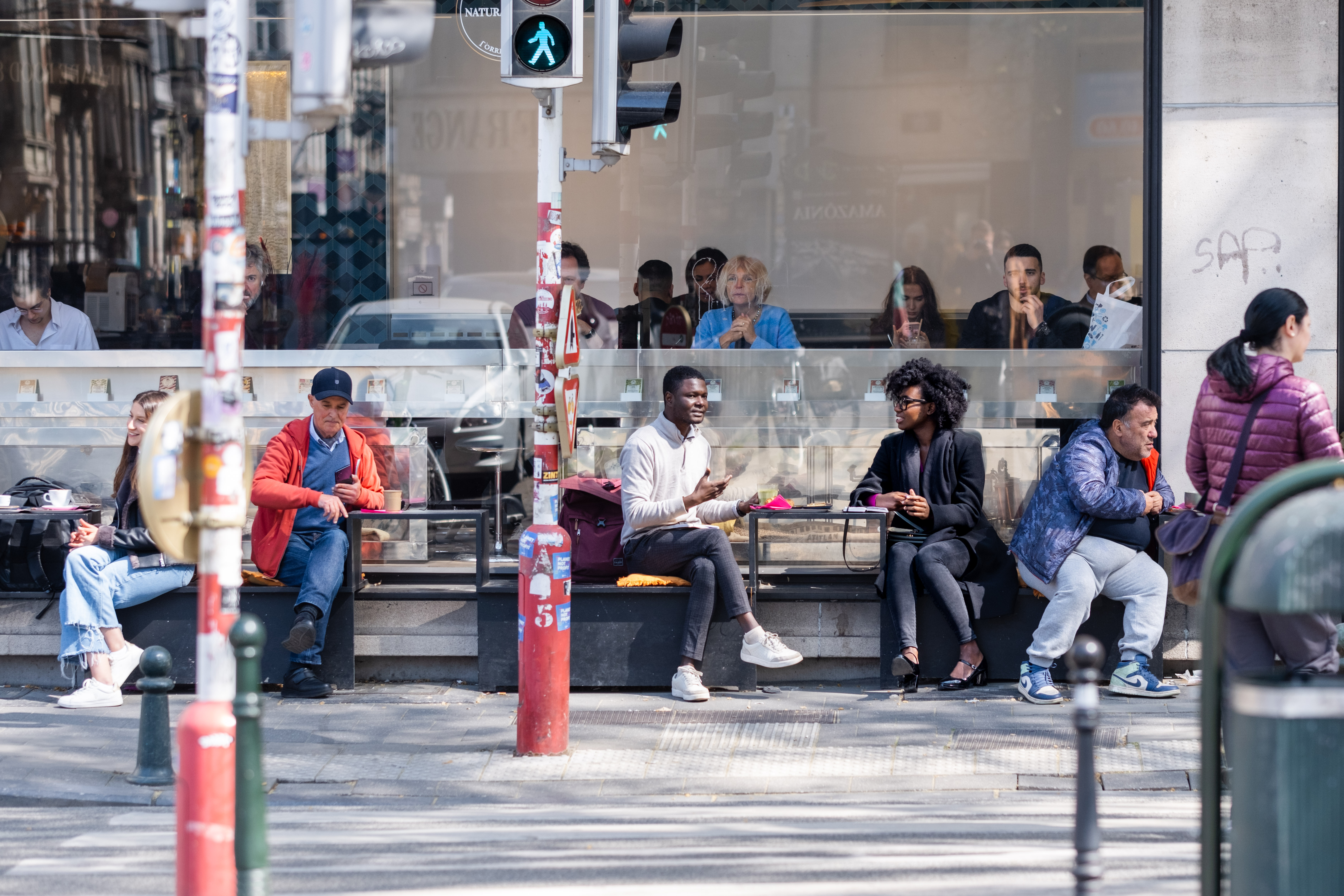
“This is Us. This is Brussels.” starts with the question: “What if Brussels were 1,000 people?” and uses this data to build a “human archive” with the stories of 1,000 individuals, making Brussels and Brussels residents of the 2020s visible: a super-diverse, young, layered, and complex city at the heart of Europe.
The project aims to discover and create new alliances, and to find the “us” in their stories. Based on this statistical snapshot of 1,000 Brussels residents, we seek out real people in Brussels who match each profile in terms of residence, gender, age, origin, and nationality. At the same time, we also monitor less visible traits like socio-economic background. The first 200 contributions from Brussels residents are now accessible, and the next 300 are currently being collected. This is done by a highly diverse team of specially trained “Heritage Brokers,” and made available in the “Human Archive.”
Discover more http://www.thisisus.brussels & Instagram


