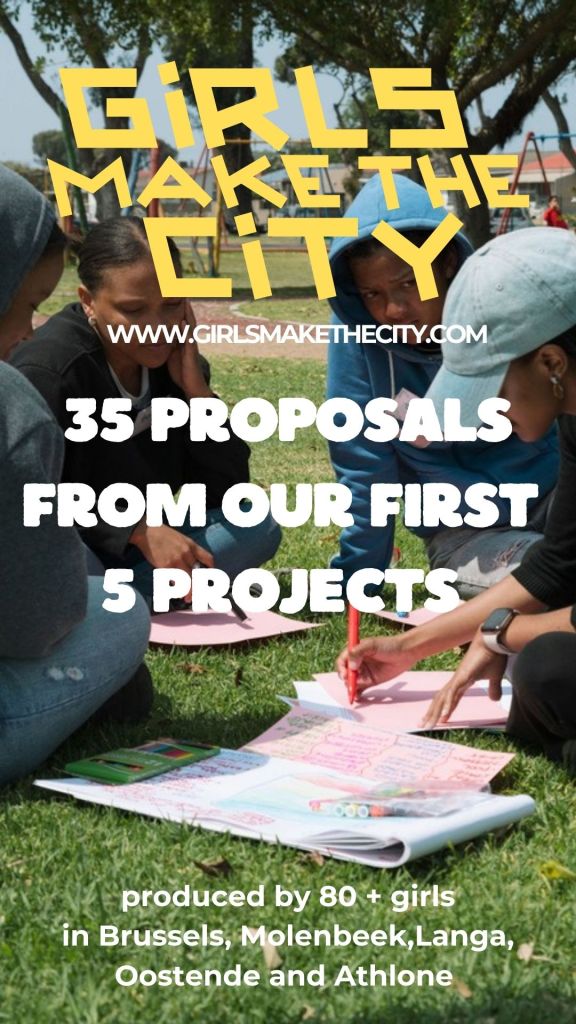
Over five editions in the Marollen (Brussels), Park West (Molenbeek), Langa Township and Athlone (Cape Town), and the Leopoldpark (Ostend), Girls Make the City (GMTC) has grown into a powerful, place-based movement. More than 80 girls and women took part in these projects, each time building a sense of sisterhood, a new “us”, shaped by the unique character, culture and potential of their neighbourhood.
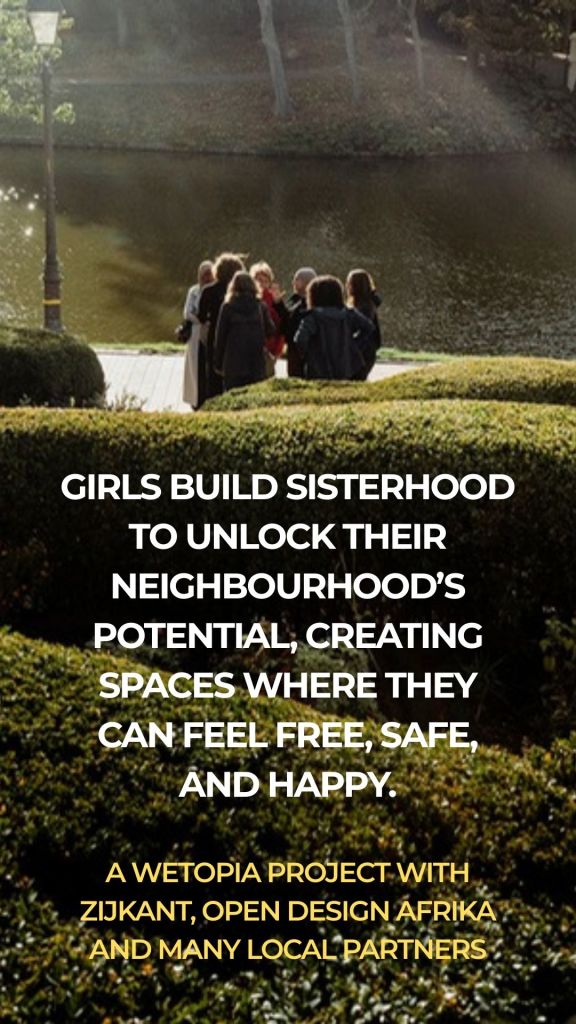
The initiative, developed and led by social designer Joke Quintens (Wetopia) in collaboration with ZIJkant in Belgium, Open Design Afrika in Cape Town and great teams with local partners, brought together groups of girls and women who explored their public spaces and developed ideas for change. Although deeply rooted in hyperlocal realities, the projects revealed striking similarities. Across continents, languages and lifestyles, girls consistently articulate the same desires: they want to reclaim space, feel safe, express themselves, build confidence, reimagine identities, create opportunities, and contribute culturally.
These shared ambitions are listed in seven clusters, seven forms of city-making that girls themselves prioritise. Together, they form a set of 35 concepts that show how girls and women can transform public space when they are invited in as co-creators.
CLUSTER 1 — Girls want to reclaim public spaces
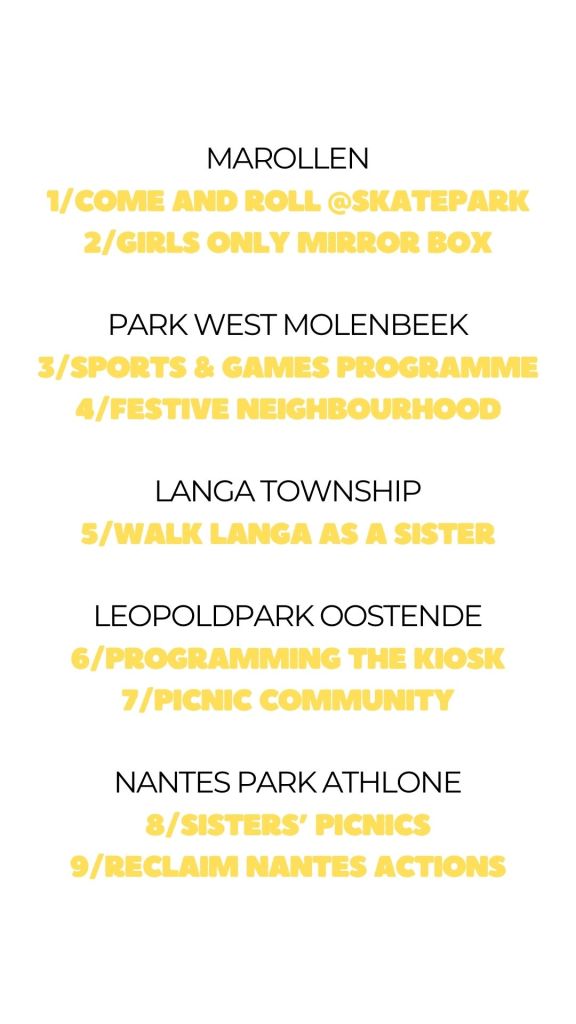
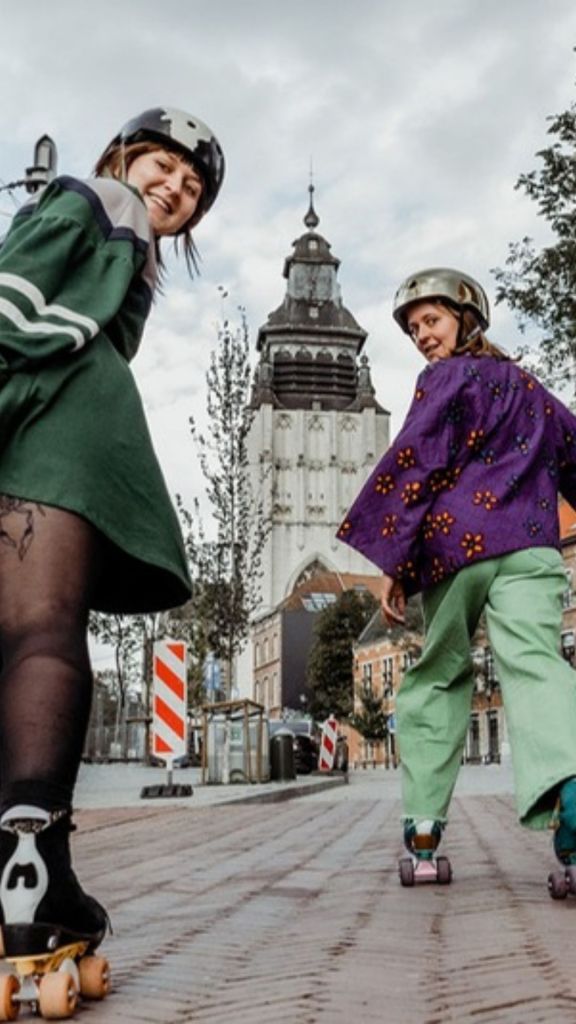
Across all five locations, girls expressed a clear message: public space belongs to us too. Whether reclaiming a skatepark in the Marollen, animating Park West through sports and festive community moments, or walking through Langa as a united group of sisters, these actions reshape how girls can move through their neighbourhoods. The same desire was visible in Ostend’s Leopoldpark, where programming a kiosk and organising open picnics can created unexpected encounters and increased visibility. In Athlone, communal picnics and collective acts of reclaiming Nantes Park can help establish a renewed presence of girls and women in a space.
What unites these ideas is their insistence on everyday freedom: the freedom to play, to relax, to gather, to take up space without apology.
CLUSTER 2 — Girls want new identities for public spaces
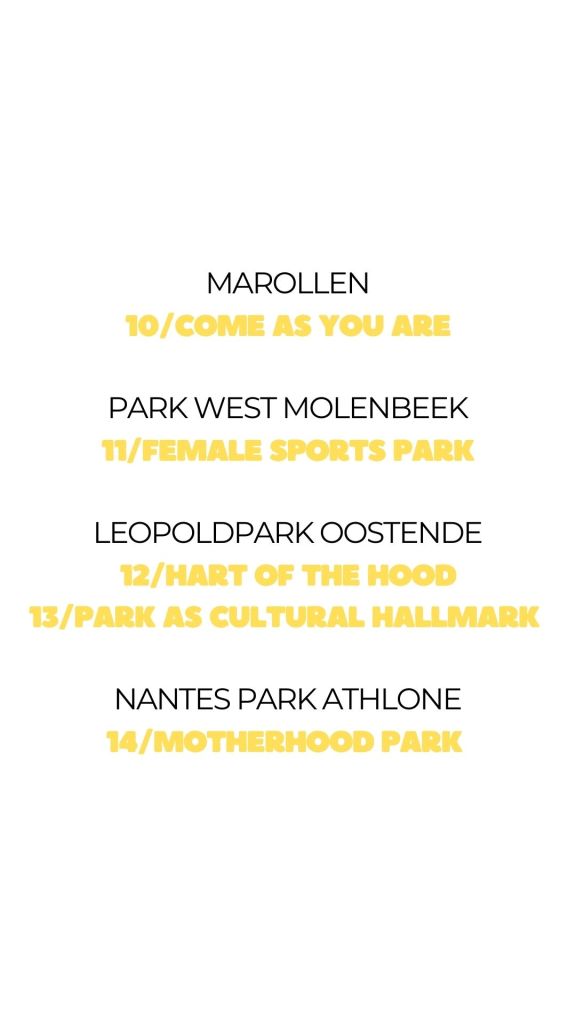
Beyond simply using public space, girls wanted to reshape the identity of these places. In the Marollen, that meant encouraging everyone to show up authentically, while in Park West it meant reimagining a sports park through a female lens. In Ostend, girls envisioned the Leopoldpark as the “heart of the neighbourhood”, a space recognised for its cultural significance, while in Athlone they envision the transformation Nantes Park into a place that reflects the strength and care associated with motherhood.
These concepts show that girls and women do not merely fit into existing identities, but they expand and enrich them.
CLUSTER 3 — Girls want friendly infra in public spaces
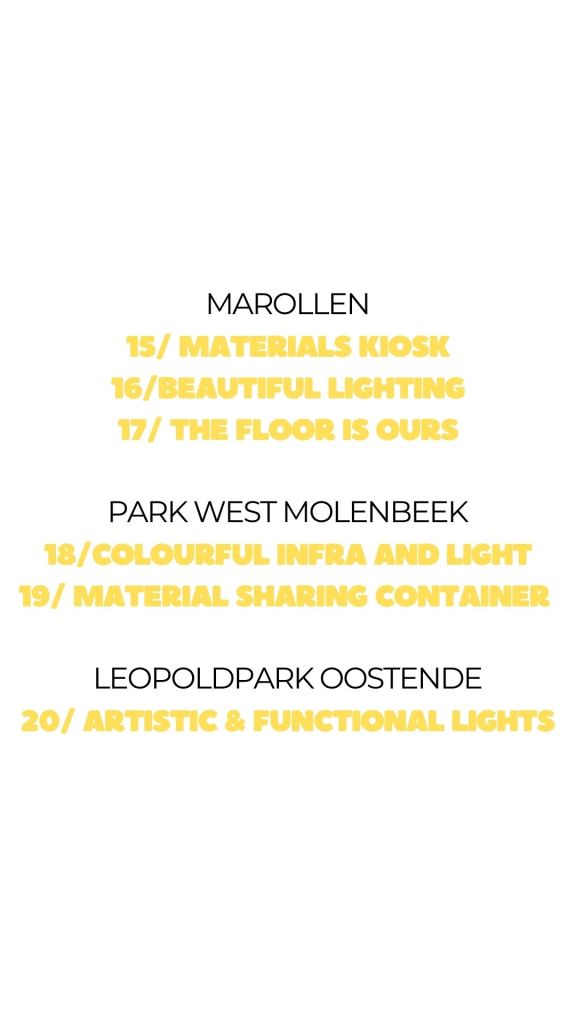
Another cross-continental finding is the need for infrastructure that truly invites girls in. In the Marollen this meant practical elements such as a materials kiosk, better lighting and a welcoming ground surface that signals “the floor is ours”. Park West added colour, vibrancy and shared resources through its own infrastructure ideas, while in Ostend artistic lighting showed how functional improvements can also bring beauty and atmosphere.
Friendly infrastructure is not only a matter of safety or comfort, it shapes how girls feel about their right to be in public space.
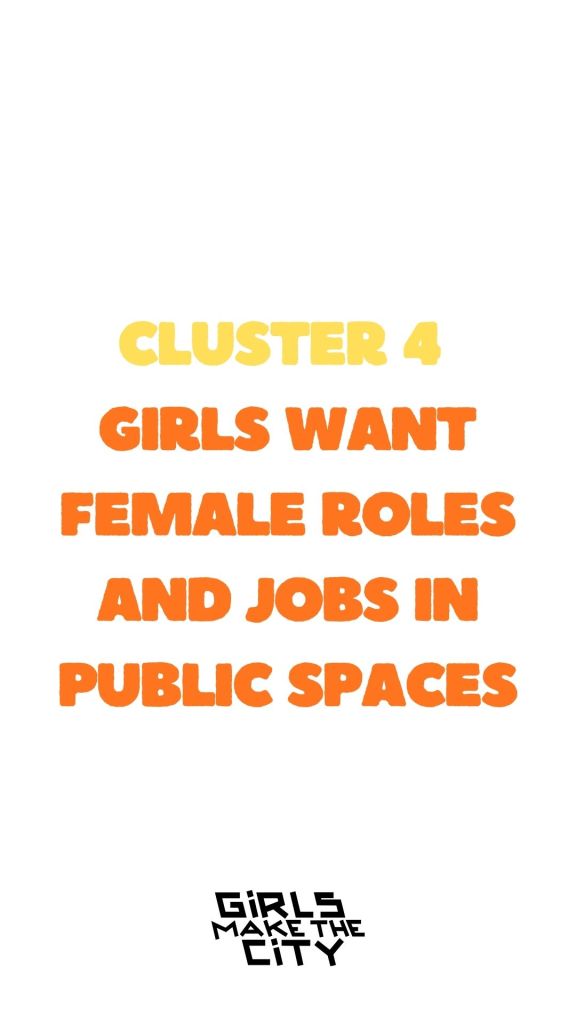
CLUSTER 4 — Girls want female roles and jobs in public spaces
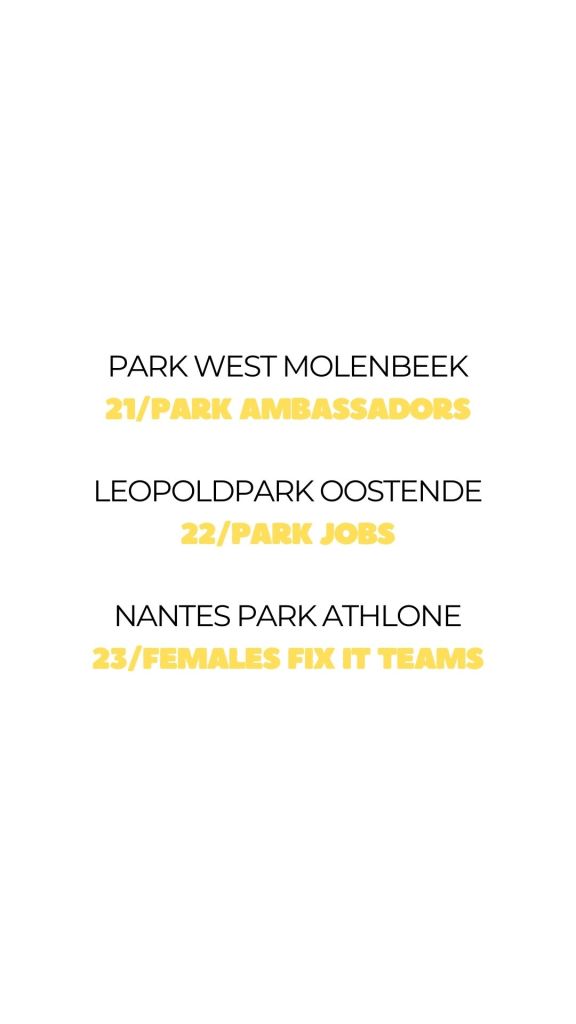
The girls also highlighted the importance of visibility and opportunity. In Park West they imagined female park ambassadors, recognising that care, safety and community roles can and should be shaped by women. Ostend’s park jobs make the same point from another angle: women should not only use public spaces but also manage them. And in Athlone, girls proposed teams of women trained to fix and maintain infrastructure, redefining what “technical” or “public” work looks like.
These roles bring an important shift: they make women not just participants in public space, but leaders of it.
CLUSTER 5 — Girls want to work on their own confidence in public spaces
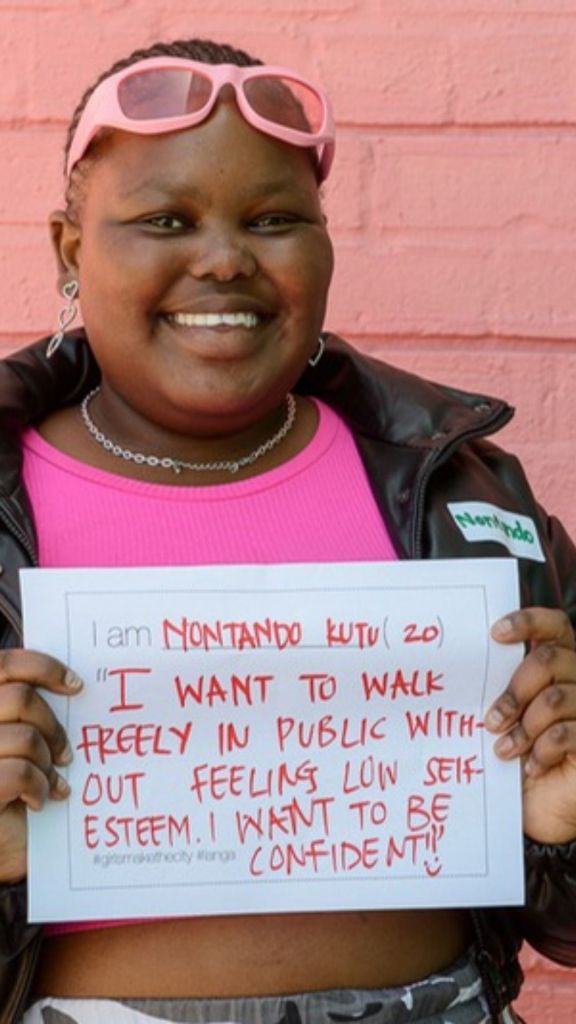
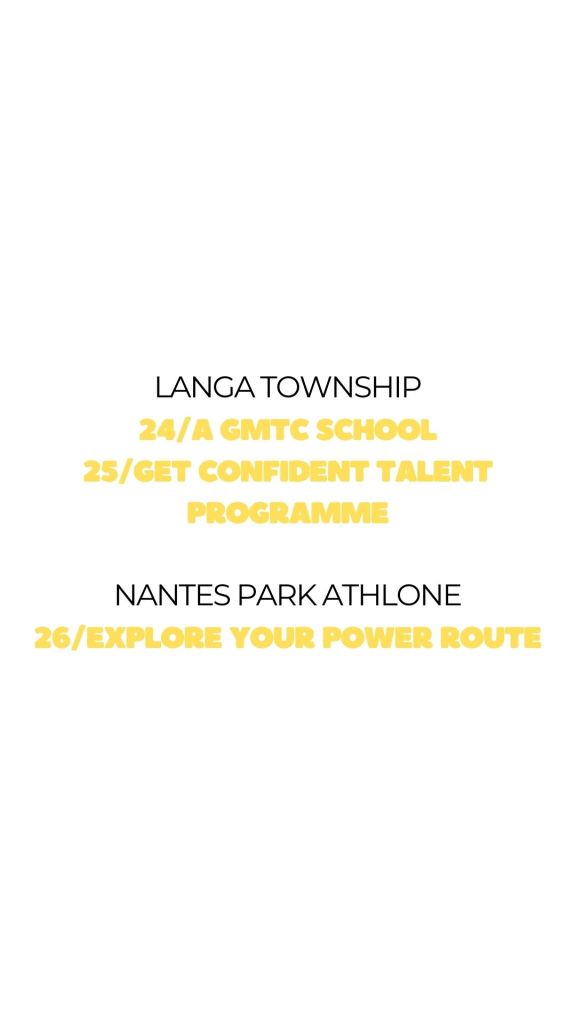
In both Langa and Athlone, the girls were explicit about the need for spaces and programmes that build confidence. A GMTC school, talent programmes, and exploratory pathways are all rooted in a desire to develop inner strength as well as public presence. For many participants, these ideas emerged from personal experience, navigating unsafe streets, being underestimated, or lacking places to practise new skills.
Confidence-building is not an add-on; it is a foundation for participation.
CLUSTER 6 — Girls want to educate men in public spaces
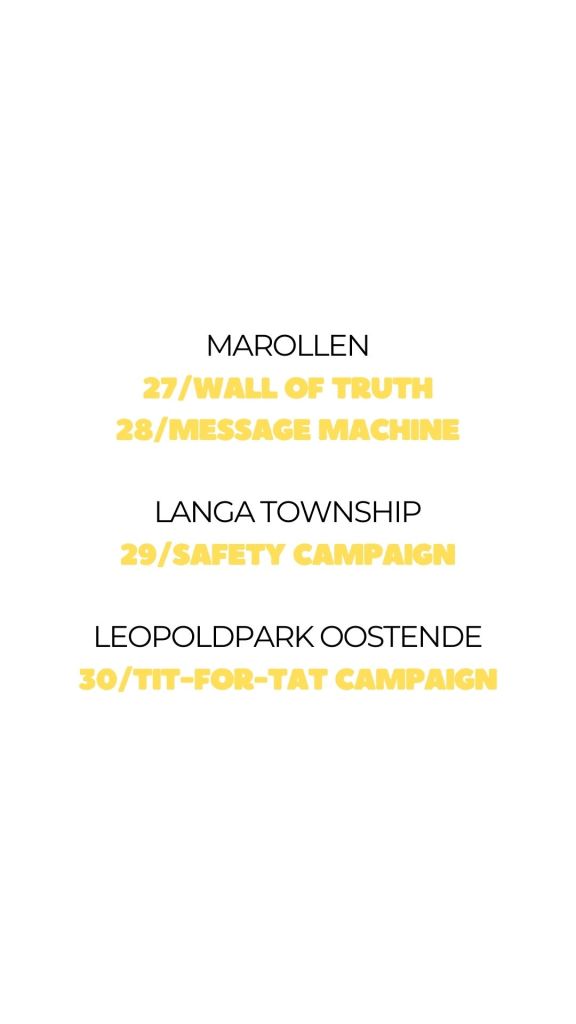
Another recurring theme, delicate but essential, is the need to shift male behaviour in public space. Whether through a Wall of Truth in the Marollen, creative messaging tools, or safety campaigns in Langa, the girls sought ways to communicate directly with boys and men. In Ostend, this took shape as an imagined reciprocal campaign, making visible the everyday negotiations of shared space.
These interventions aim not to confront, but to transform, to help men understand the impacts of their behaviour and to promote mutual respect.
CLUSTER 7 — Girls want to see new social and artistic projects in public spaces
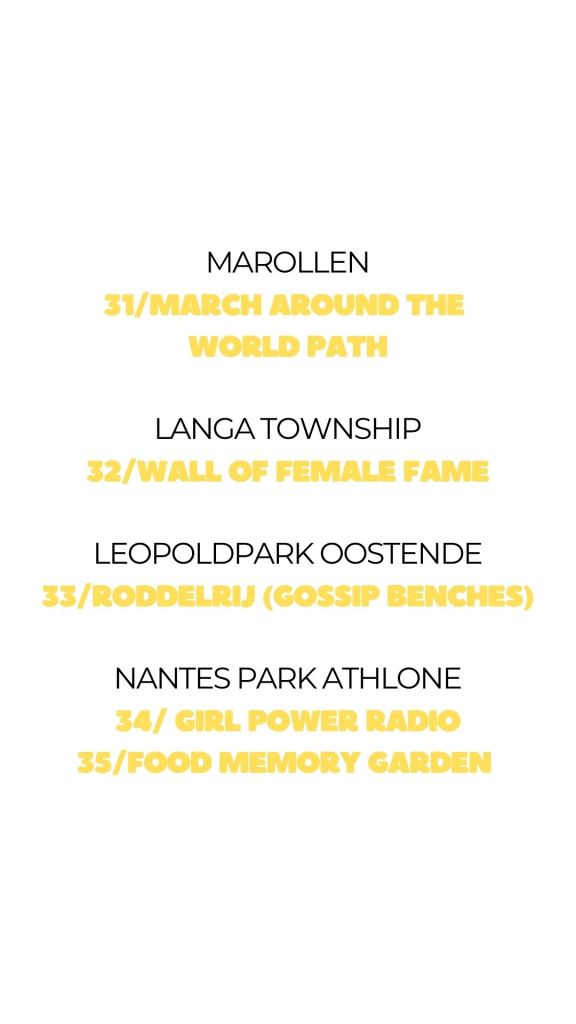
Finally, across all sites, girls expressed a desire for joyful, creative and socially meaningful experiences. From walking paths that celebrate global cultures in the Marollen, to walls honouring female icons in Langa, to Ostend’s playful gossip benches and Athlone’s girl-powered radio and food memory garden with grandmothers, artistic and social projects become this way tools for belonging.
These ideas show how culture can open doors: it gives girls a voice, creates connection, and allows stories to shape the urban landscape.
Towards the next neighbourhoods?
Together, these seven clusters form a collection of 35 concepts, each one rooted in a specific place, yet resonating across borders. Girls Make the City shows that when girls are invited to imagine and create, they bring forward visions that are playful, bold, caring and transformative.
We are ready for the next places, the next partnerships, the next groups of girls ready to claim their space.
And we hope this work inspires other neighbourhoods and cities to join us, to learn from girls, to collaborate with them, and to build public spaces where they feel free, safe and joyful.
Reach out to us: www.girlsmakethecity.com and follow us on Instagram @girlsmakethecity !




 Wetopia